
Glass Drilling
Glass drilling cuts holes for screws, buttons, cameras, sensors and connectors with diamond core drills, before the glass is tempered or strengthened. We drill through, countersunk, stepped, blind and shaped holes in glass 0.5–5 mm thick to a ±0.05 mm diameter tolerance, using core drills from 0.3 to 48 mm, and laser-drill micro-holes in thin glass.
Capabilities

Hole types
Through, countersunk, stepped · Blind and shaped
Diameter tolerance
±0.05 mm · Core drills 0.3–48 mm

Glass thickness
0.5–5 mm standard · Thicker glass on CNC

Micro-holes
Laser drilled · Tens to hundreds of microns

Edge finish
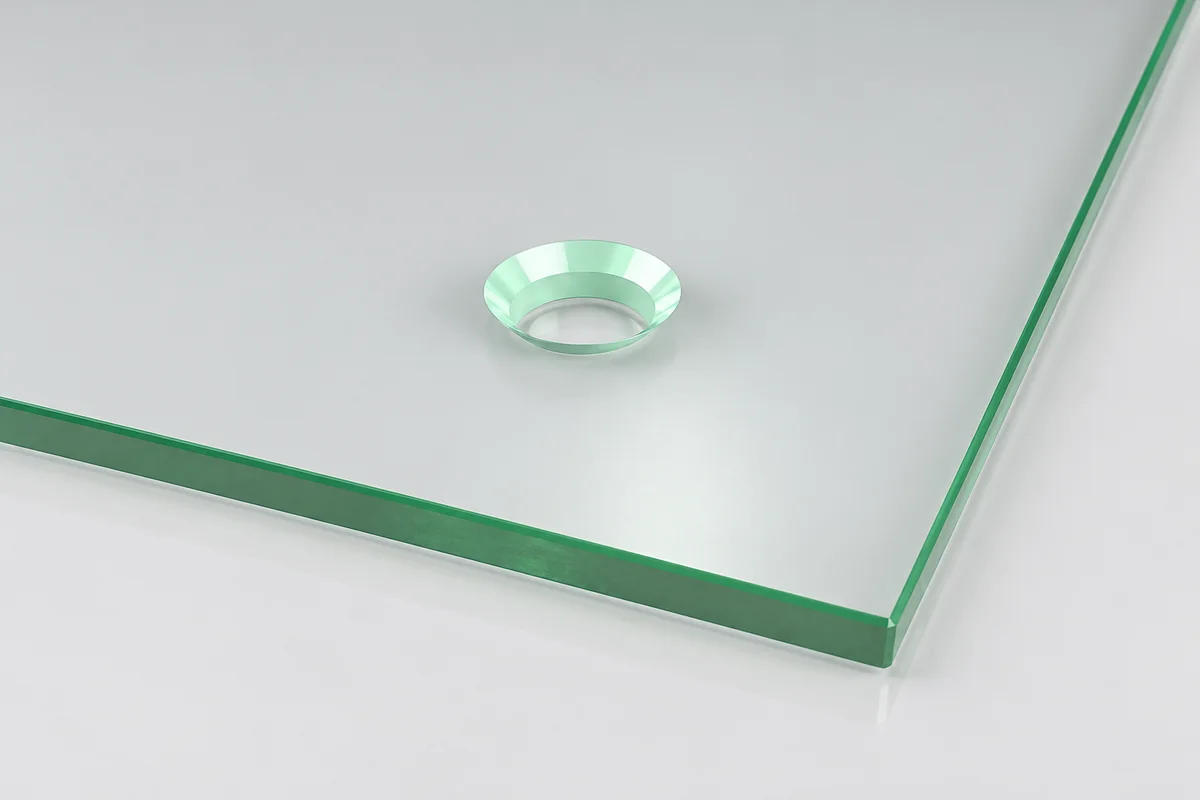
Drilled from both faces · Chamfered hole edges

Sequence
Drilled before tempering · Or chemical strengthening
Gallery
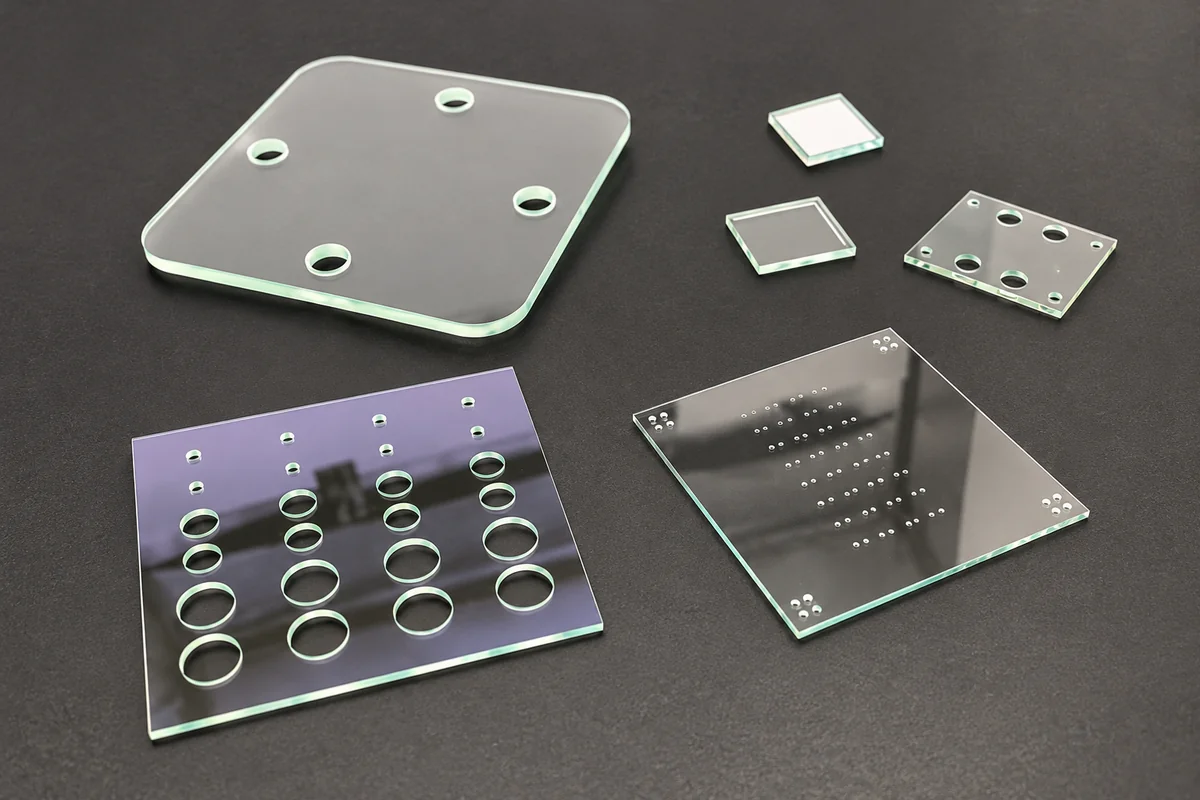
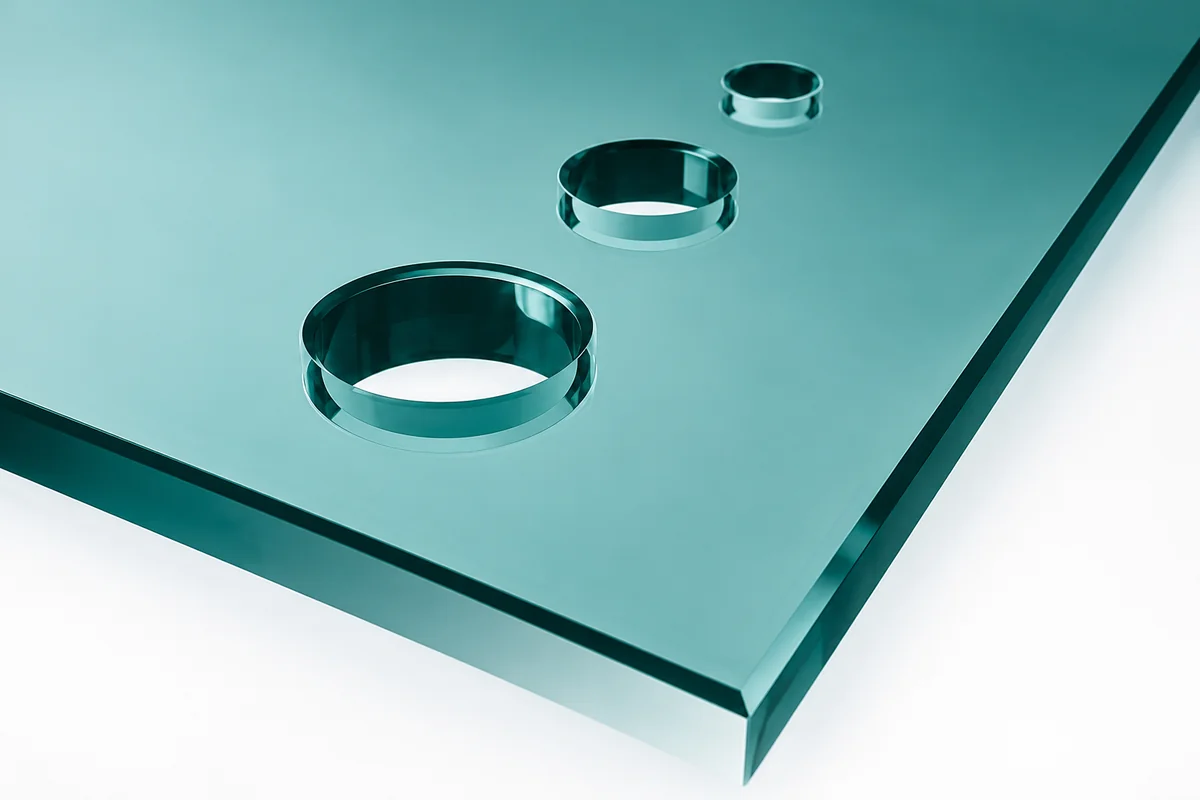
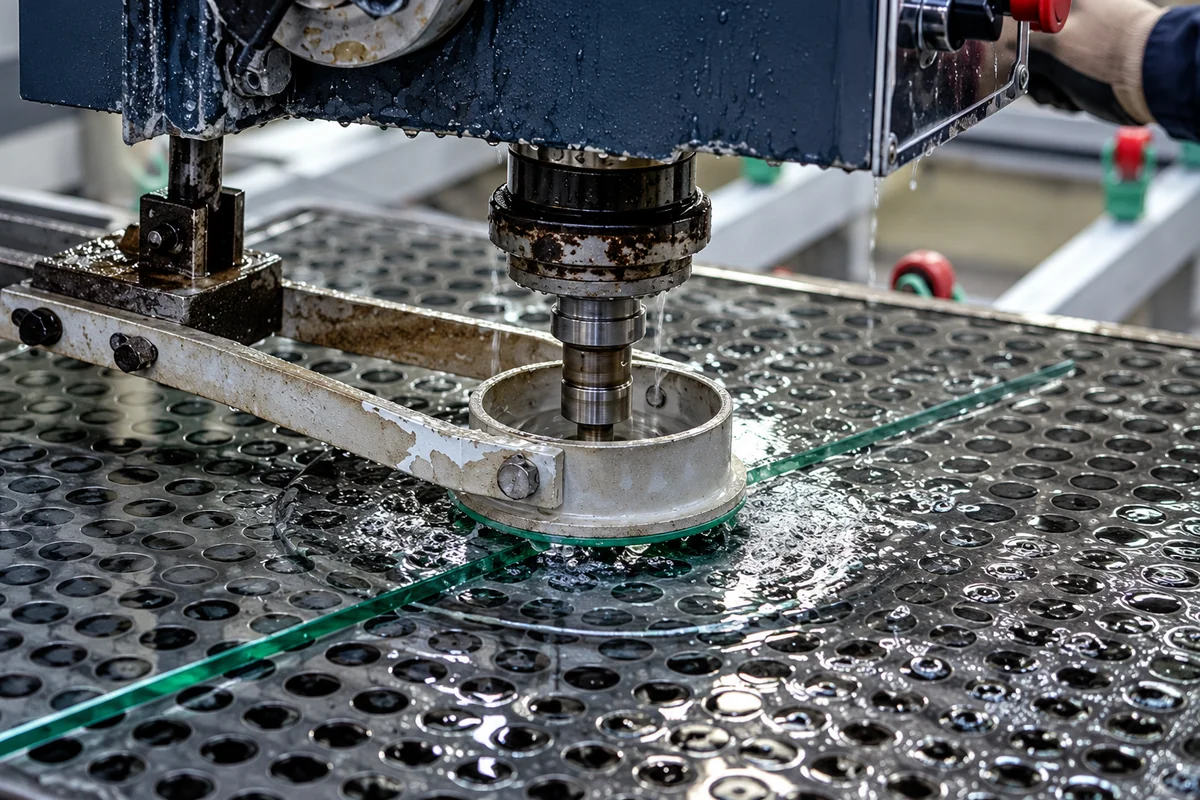
Get a glass drilling quote
Send a drawing with hole sizes and positions, glass type and thickness, and whether the panel will be tempered, and we will check the hole layout and quote the parts.
Why Holes Are Drilled First and Drilled Carefully
Every hole is drilled before the glass is tempered or chemically strengthened. Tempered glass shatters if it is drilled, and a strengthened surface loses its compression wherever it is cut through.
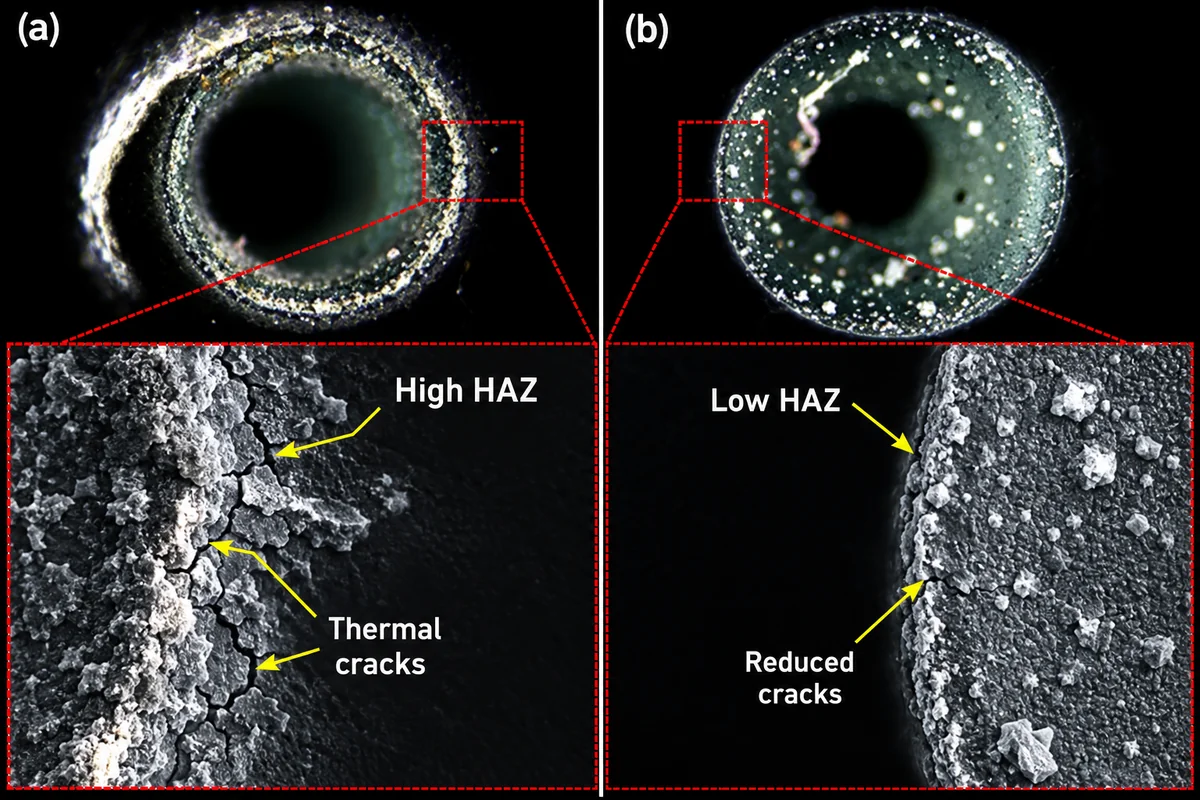
A hole is also where a panel is most likely to crack, so the way it is drilled matters. Mechanical drilling leaves chips of 10–50 µm where the drill breaks out of the glass. We drill from both faces so the cuts meet in the middle and neither side breaks out, then chamfer both hole edges. A chip left at a hole edge is where a crack starts in the tempering furnace.
Size and position matter as much as finish. Holes that are too small, or too close to an edge, a corner or another hole, disturb the even stress that tempering builds into the glass, and those panels break in the furnace or later in service.
Hole Types
Through holes
Plain round holes for fixings, cables, buttons and connectors.
Countersunk and tapered holes
Angled holes that let a screw head sit flush with the glass surface.
Stepped holes
A wider counterbore over a narrower hole, for screw heads, bushings or seated components.
Blind holes
Part-depth holes that do not break through, for locating pins, magnets or embedded parts.
Shaped holes
Square, oval and slotted openings machined on CNC rather than drilled.
Laser micro-holes
Holes of tens to hundreds of microns in thin glass, for sensors, microphones and fine apertures.
How a Hole Is Drilled
- 01
Check the layout
Each hole is checked against the size and position rules for the glass thickness before any tooling is set.
- 02
Locate the hole
The drill enters at an angle to cut a small seat, so it starts exactly on position, then drills straight.
- 03
Drill from both faces
A diamond core drill cuts halfway from each side under deionized-water coolant, meeting in the middle.
- 04
Chamfer the edges
Both hole edges are chamfered or polished to remove remaining chips.
- 05
Inspect, then strengthen
Diameter and position are checked to ±0.05 mm before the panel goes to tempering or chemical strengthening.
Hole Size and Position Rules
For glass that will be thermally tempered, with glass thickness t:
| Rule | Minimum | Example on 6 mm glass |
|---|---|---|
| Hole diameter | At least t; about 3t is safest | 6 mm minimum, 18 mm preferred |
| Hole edge to glass edge | 2t | 12 mm |
| Between hole edges | 2t | 12 mm |
| Hole edge to a corner | 6t | 36 mm |
Holes that break these rules can sometimes still be made, with lower yield or a different strengthening route; send the drawing and we will say which. Glass that stays annealed, and thin chemically strengthened covers, allow smaller holes and tighter spacing.