
Hot Mirrors & Cold Mirrors
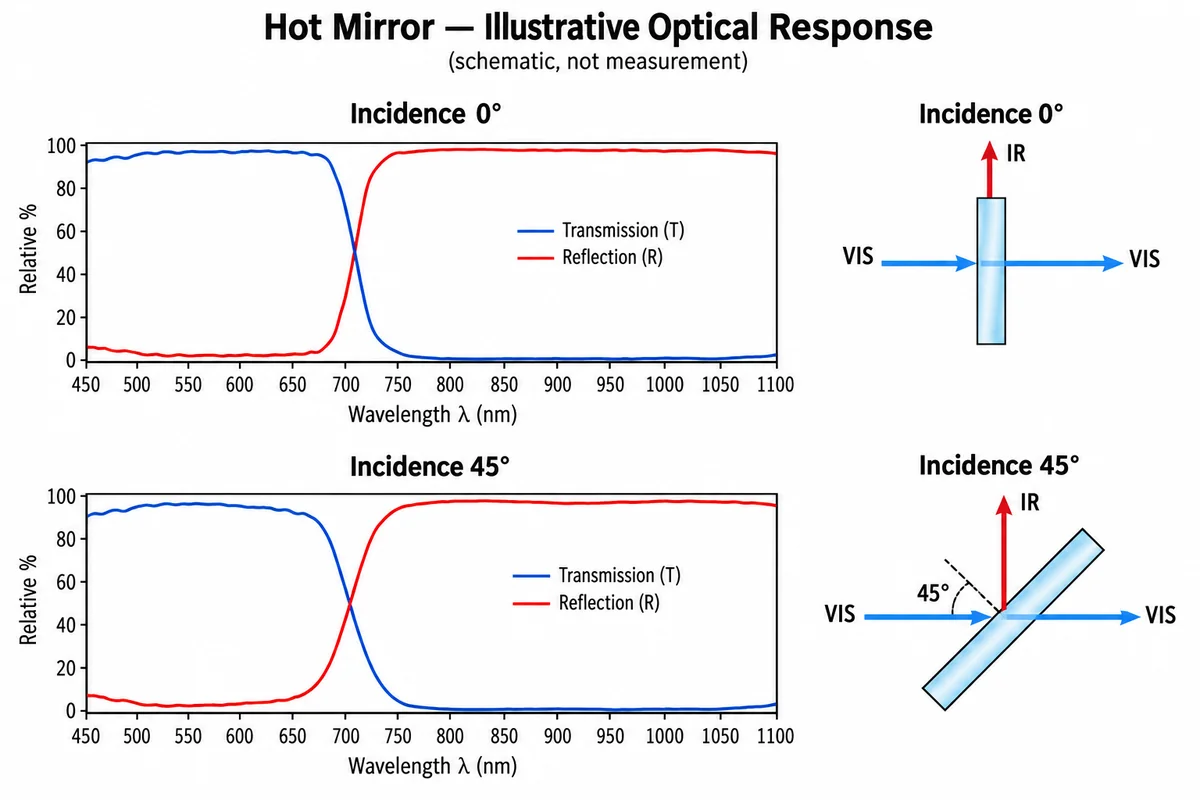
Hot and cold mirrors are dielectric mirrors that separate visible light from infrared. A hot mirror transmits visible light and reflects infrared; a cold mirror reflects visible light and transmits infrared. We supply standard designs from 350 to 1600 nm, with visible transmission above 93% on hot mirrors and reflection above 95% in the reflected band, at 0° or 45°.
Capabilities

Hot mirrors
T >93%, 425–675 nm · R >95% to 950 or 1150 nm

Extended hot mirror
R >90% to 1150 nm · R 80% to 1600 nm

Cold mirrors
R >95%, 425–650 nm · T >85%, 800–1200 nm

UV cold mirror
R >95%, 350–450 nm · T >90%, 550–1200 nm

Angle
0° or 45° · Designed for your light path

Surface
Double-side polished, 40/20 · Most designs from stock
Gallery
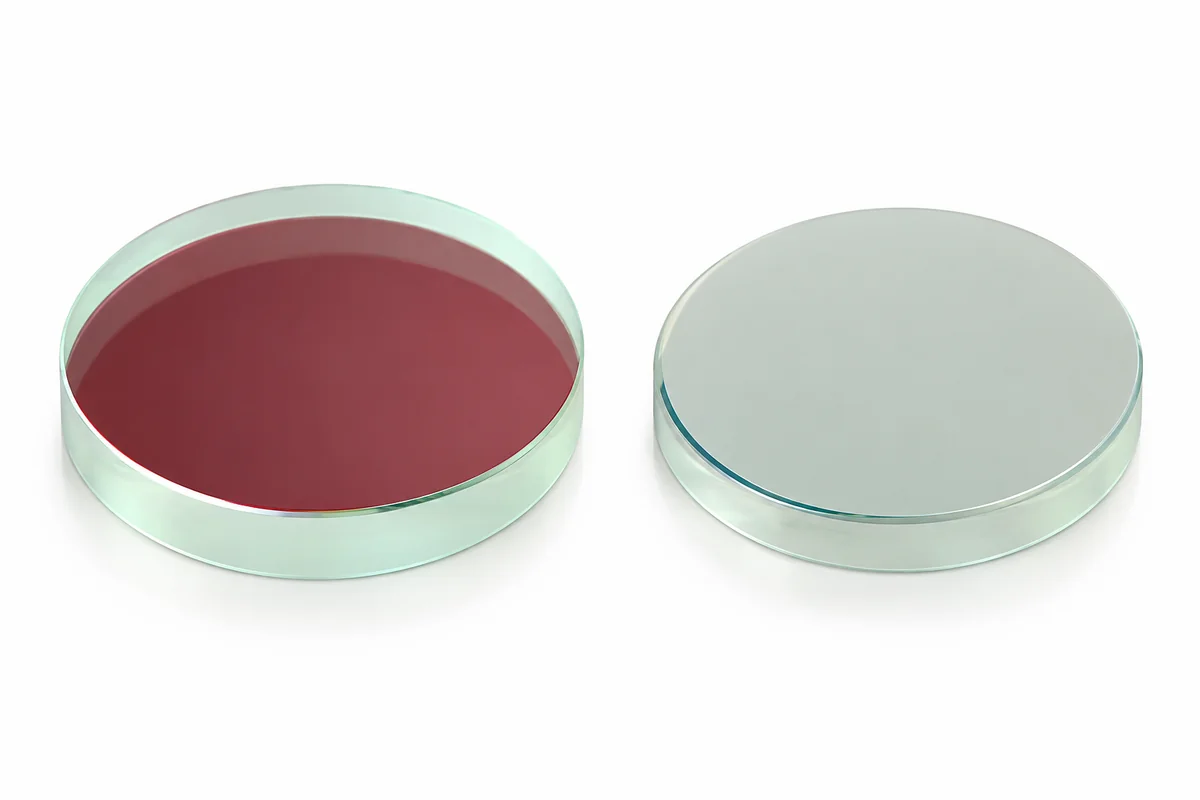

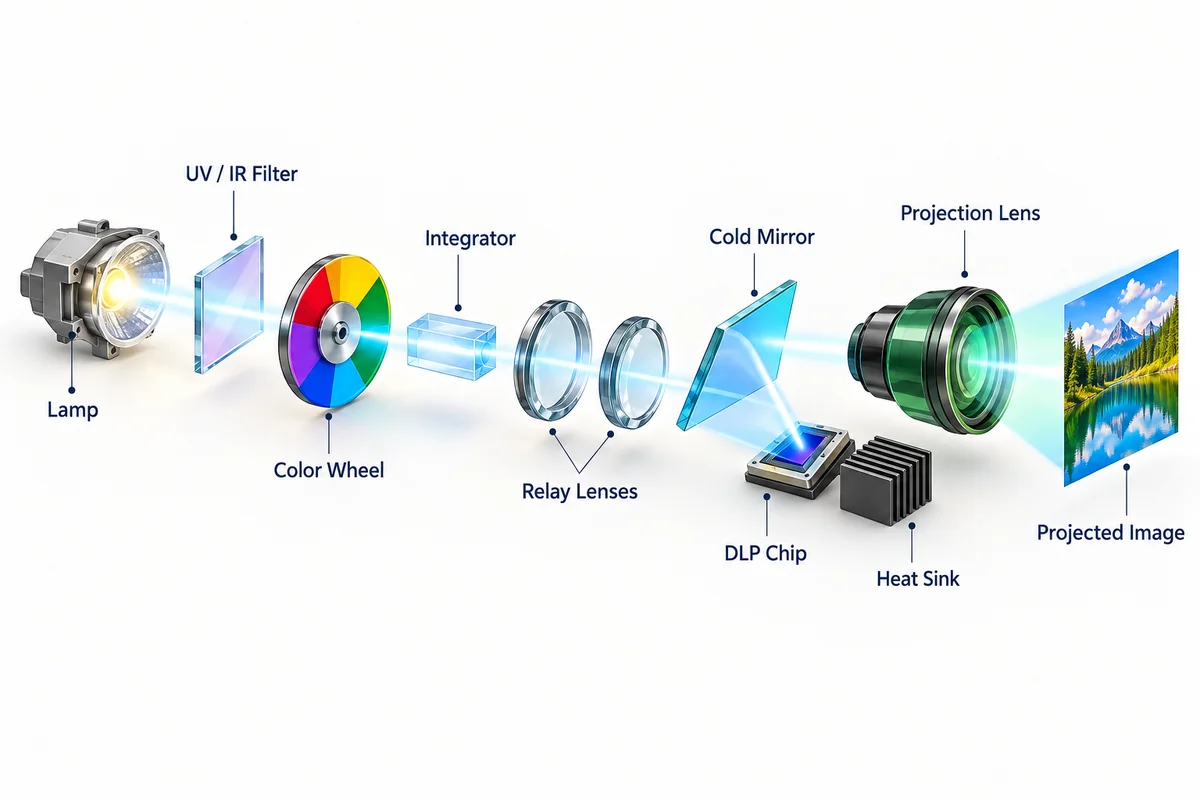
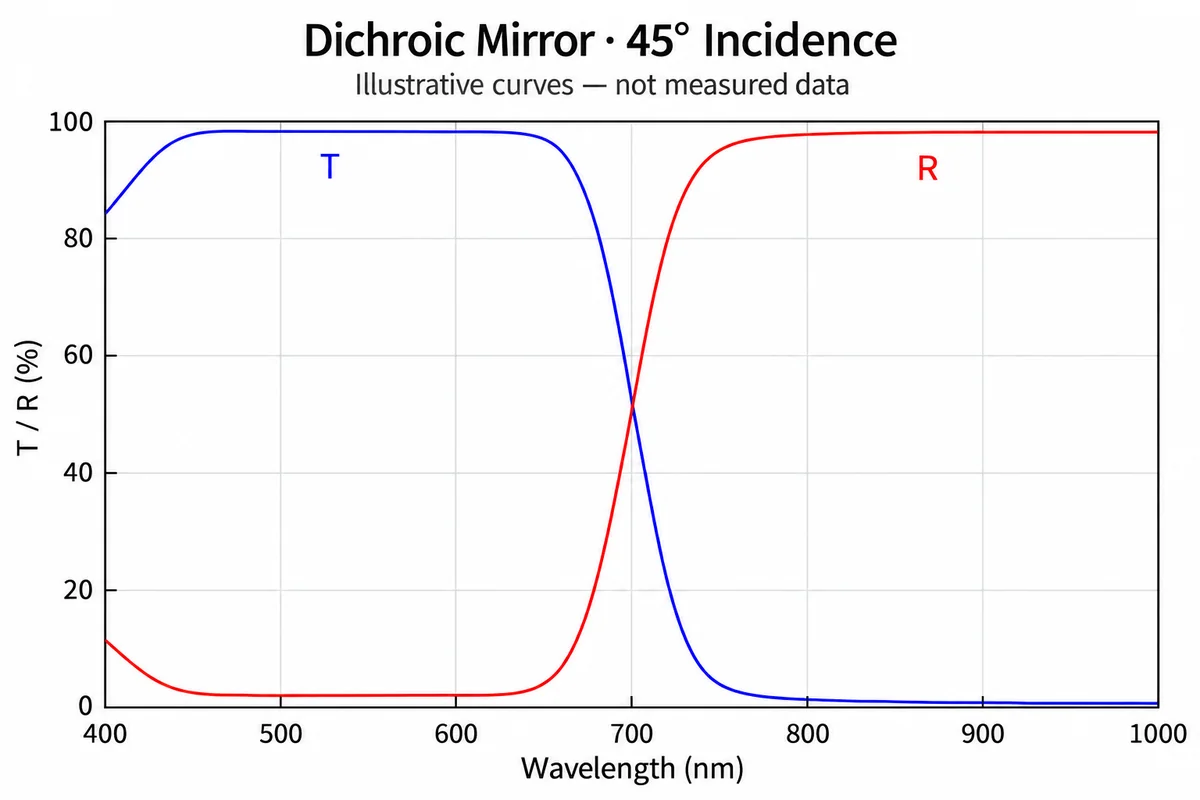
Get a hot or cold mirror quote
Tell us the light source, which band should pass and which should be reflected, the angle and the size, and we will match a standard design or quote a custom one.
Standard Hot and Cold Mirror Designs
| Mirror | Transmits | Reflects | Angle |
|---|---|---|---|
| Economy hot mirror, 950 | >93%, 425–675 nm | >95%, 750–950 nm | To order |
| Hot mirror, 1150 | >93%, 425–675 nm | >95%, 750–1150 nm | To order |
| Extended hot mirror, 1600 | >85%, 425–675 nm | >90%, 750–1150 nm; 80%, 1150–1600 nm | To order |
| UV cold mirror | >90%, 550–1200 nm | >95%, 350–450 nm | To order |
| Standard cold mirror, 45° | >85%, 800–1200 nm | >95%, 425–650 nm | 45° |
| Standard cold mirror, 0° | >85%, 800–1200 nm | >95%, 425–650 nm | 0° |
Values are averages over each band. Custom edges anywhere from 350 to 1500 nm are made to order.
Where Should the Heat Go?
The choice between a hot and a cold mirror comes down to which way the infrared should travel. A hot mirror passes visible light forward and sends infrared back toward the lamp, keeping heat off an LCD, film, sample or camera downstream. A cold mirror sends visible light forward by reflection and lets infrared pass straight through to the back, where the housing has to carry the heat away. Both reflect rather than absorb, so the mirror itself stays far cooler than heat-absorbing glass.
How far the reflection band reaches is the second decision. Reflecting out to 1150 nm covers the full response of silicon camera sensors. Extending it to 1600 nm stops more of a halogen lamp’s heat, but visible transmission drops from 93% to 85%. Choose the shortest band that covers your detector or the heat you need to stop.
Angle, Substrate and Supply
Angle of incidence
Cold mirrors come in separate 0° and 45° versions with the same band specifications. A dichroic edge moves to shorter wavelengths as the angle grows, so order the mirror for the angle it will actually sit at in your light path.
Substrate near a lamp
A mirror close to a hot lamp should be on borosilicate, which handles more heat and thermal shock than soda lime.
Reflective and absorbing together
For very hot lamps, a hot mirror can be paired with heat-absorbing KG glass: the mirror reflects most of the infrared and the glass absorbs what leaks through.
Stock and mounting
Most standard designs ship from stock as double-side polished glass with 40/20 scratch-dig, and can be supplied cut to size or mounted.
Where Hot and Cold Mirrors Are Used
Projectors and LCD light engines
A 1150 nm hot mirror in front of the lamp keeps infrared off the LCD panel and optics.
Fiber-optic illuminators and microscopes
A hot mirror keeps lamp heat off the fiber bundle or the sample while passing the visible light.
Cameras near hot light sources
A hot mirror stops the infrared that would wash out color on a silicon sensor.
Stage, dental and display lamps
A cold mirror reflector sends visible light forward and lets infrared escape out the back, so the lit object stays cool.
UV curing
A UV cold mirror reflects 350–450 nm onto the work and passes the lamp’s visible and infrared heat out of the beam.
NIR machine vision
A cold mirror or a visible-blocking longpass filter passes near-infrared to the camera while removing visible light, raising IR contrast.