
Molded & Pressed Glass
We press and mold glass into shapes that cannot be cut from flat sheet: lighting lenses, globes, domes, reflectors and covers, plus aspherical, cylindrical and spherical forms. Parts are molded in soda lime, low iron, borosilicate, colored glass and quartz, using molds we design and build in-house.
Capabilities

Materials
Soda lime, low iron · Borosilicate, colored, quartz

Shapes
Aspherical, cylindrical, spherical · Flat and custom

Tooling
Molds designed in-house · Built for your part
Lighting parts
PAR and spread lenses · Globes, domes, diffusers
Secondary work
Tempering, cutting, drilling · Coatings

Tubing and rod
2–425 mm OD tubing · 2–38 mm rod
Gallery
Get a molded glass quote
Send your drawing or sample, the material, the operating temperature and your expected annual volume, and we will review the mold and part cost.
What We Mold
Most molded glass goes into lighting, where the shape and surface pattern control how light leaves the fixture. Glass tubing and rod are covered on their own page.
Lighting lenses
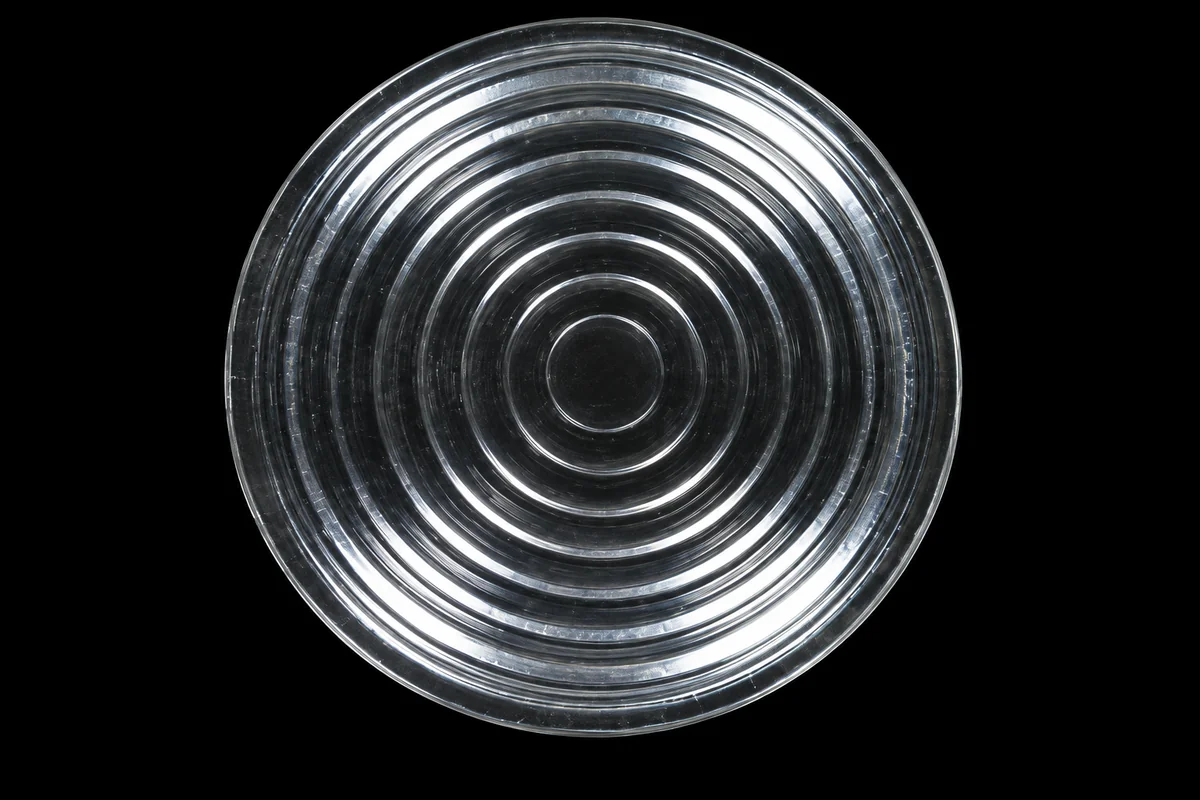
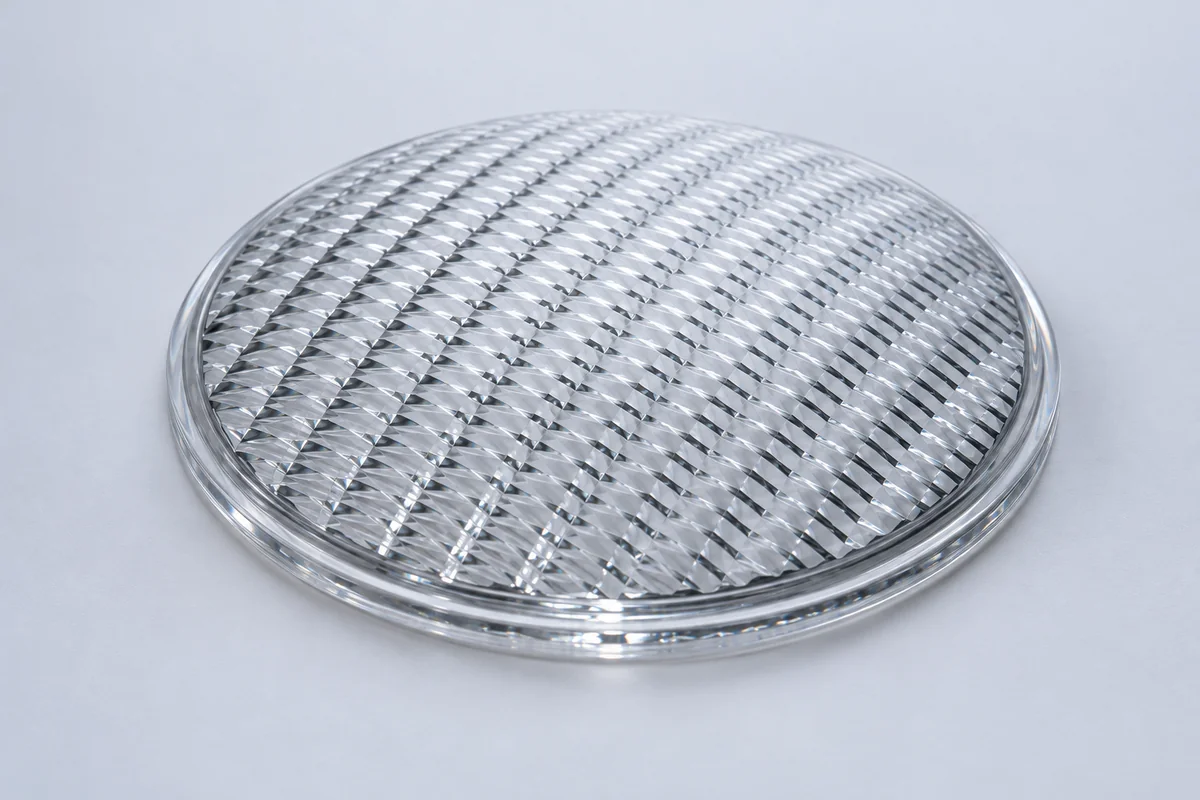
PAR lenses, spread lenses and diffusers, pressed with prismatic or textured faces that shape and soften the beam.
Globes, domes and cylinders
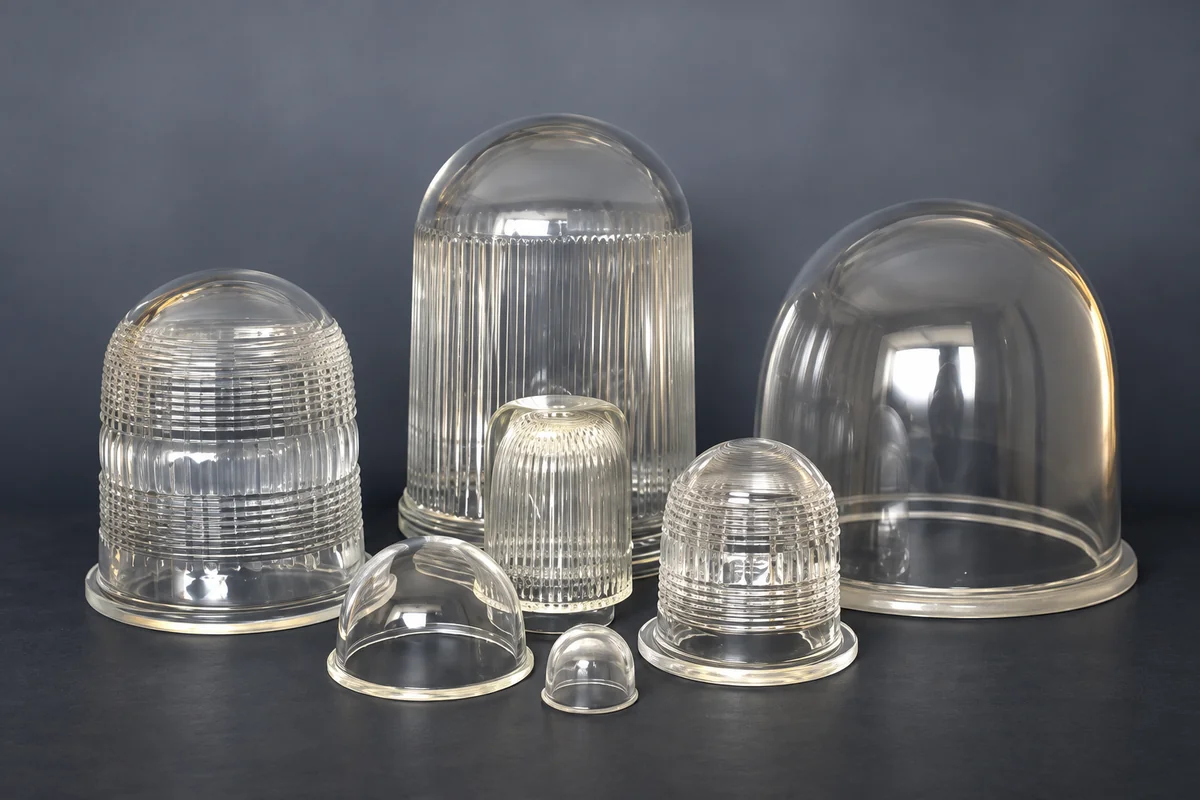
Enclosed covers for pendant, wall and outdoor fixtures, molded as one piece with a mounting lip or thread.
Reflectors
Molded glass reflector bodies that are then coated to direct light forward.
Explosion-proof and industrial glass
Thick molded globes and covers for heavy-duty and hazardous-location fixtures, usually in borosilicate.
Colored glass
Shades and decorative pieces colored through the glass body, so the color cannot wear off.
Optical blanks
Aspherical, cylindrical and spherical forms for condensers and illumination optics, used as molded or ground and polished afterward.
Molding Materials
The operating temperature usually decides the glass. Values are normal service temperatures for 6 mm glass.
| Material | Why choose it | Service temperature | Typical molded parts |
|---|---|---|---|
| Soda lime | Lowest cost and easiest to press | 110 °C annealed, 220 °C tempered | Indoor lamp covers, decorative pieces |
| Low iron soda lime | Highest clarity, no green edge | As soda lime | Lenses where light output or color matters |
| Borosilicate (Pyrex®-type) | Low thermal expansion, resists thermal shock | 230 °C annealed, 260 °C tempered | High-wattage and outdoor lighting, lab glass |
| Colored glass | Color through the full thickness | As the base glass | Signal lenses, shades, decorative glass |
| Quartz | Highest heat resistance and UV transmission | Above borosilicate | UV lamps, high-temperature covers |
Borosilicate takes roughly twice the service temperature of soda lime, so it is the standard choice for lamp covers close to a hot source.
From Mold to Finished Part
- 01
Review the drawing or sample
We check the shape, wall thickness, material and operating temperature, and confirm whether the part should be molded or cut from sheet.
- 02
Design and build the mold
Molds are designed and machined in-house for your part, and stay assigned to your repeat orders.
- 03
Press and anneal
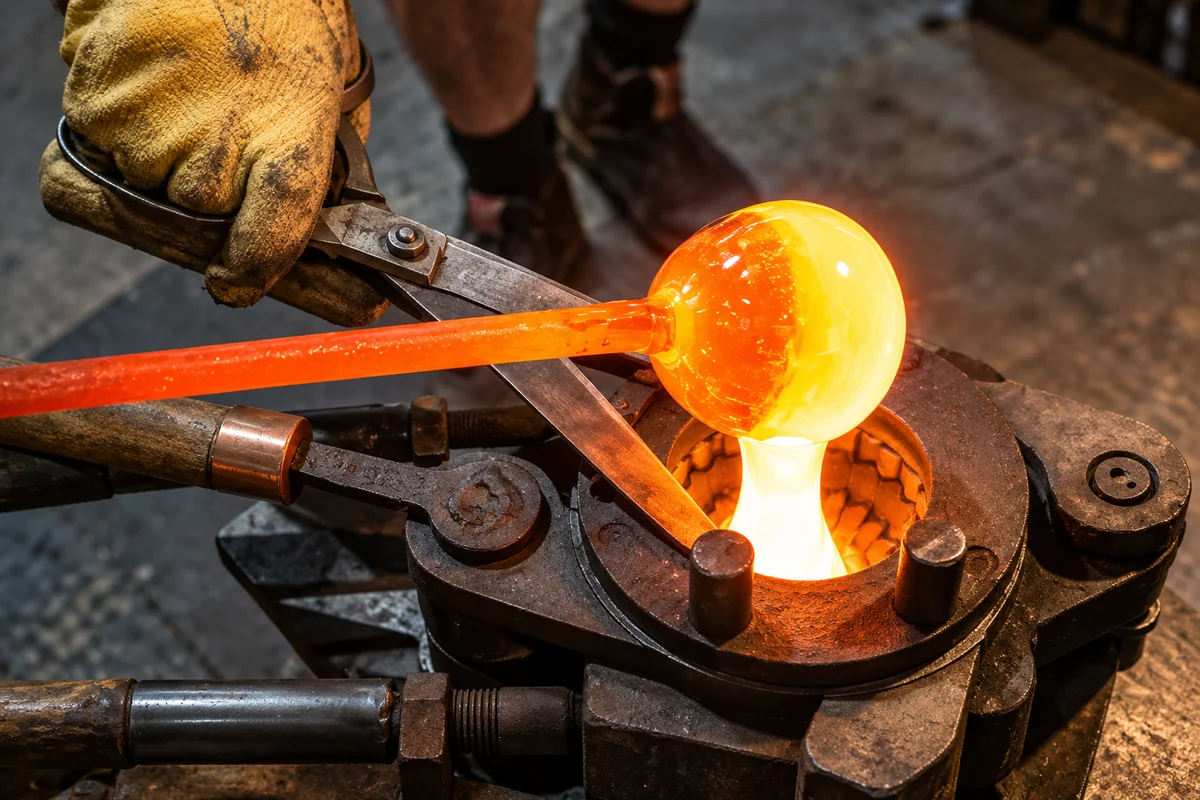
Hot glass is pressed in the mold, then annealed to remove the stress left by forming.
- 04
Finish and strengthen
Parts can be cut, drilled, edge ground, thermally tempered or coated after molding.
- 05
Inspect and ship
Each batch is checked against the drawing before packing.
Molded, or Cut from Sheet?
Molding pays off when the part has a three-dimensional shape, such as a dome, a globe or a patterned lens, and the volume repeats. The mold is a one-time cost spread across every part, so the per-part price falls as quantities rise. Flat parts, even with complex outlines and holes, are usually cheaper cut, CNC machined and tempered from float sheet with no tooling.
A pressed surface is smooth enough to spread and direct light, which is why it suits lighting lenses and covers. Imaging optics need ground and polished surfaces; for those, a molded blank can be polished afterward, or the lens made from block glass.