Glass Edge Grinding & Polishing
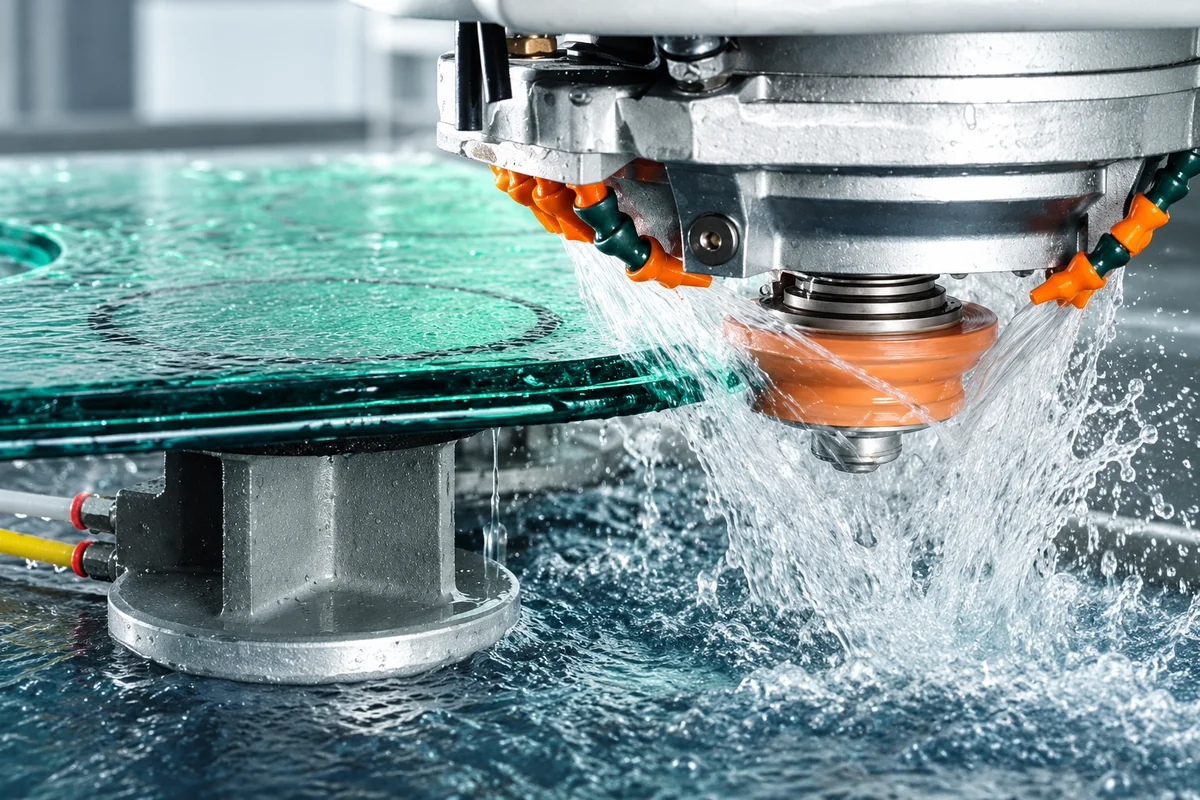
Edge grinding and polishing turns a sharp cut glass edge into a safe, strong and finished one. We seam, grind, polish, pencil, bevel and chamfer edges and grind 2.5D arcs on glass 0.26–25 mm thick and up to 3600 × 2400 mm, holding ±0.1 mm on the finished size, on CNC machining centers.
Capabilities

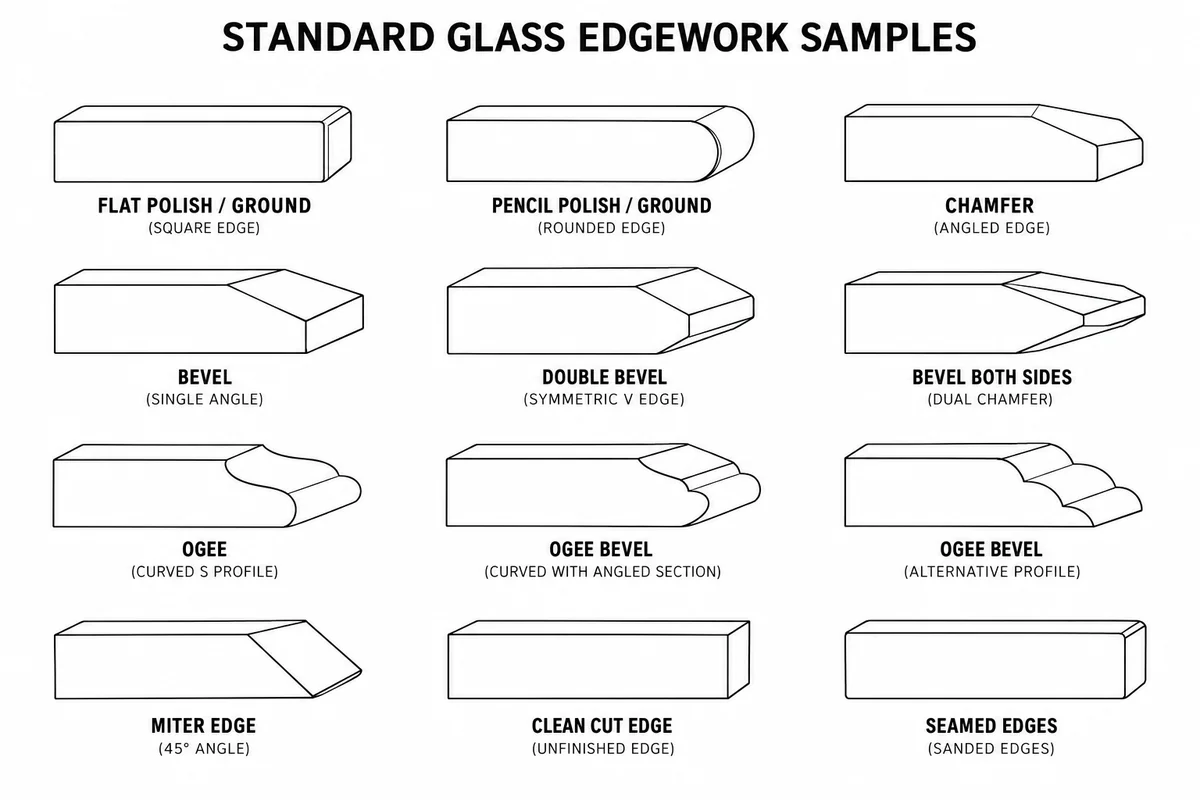
Edge types
Seamed, flat ground, flat polished · Pencil, beveled, chamfered, 2.5D
Thickness
0.26–25 mm · Ultra-thin to heavy panels

Size
Up to 3600 × 2400 mm · Shaped and round parts

Tolerance
±0.1 mm · On the finished size

Inspection
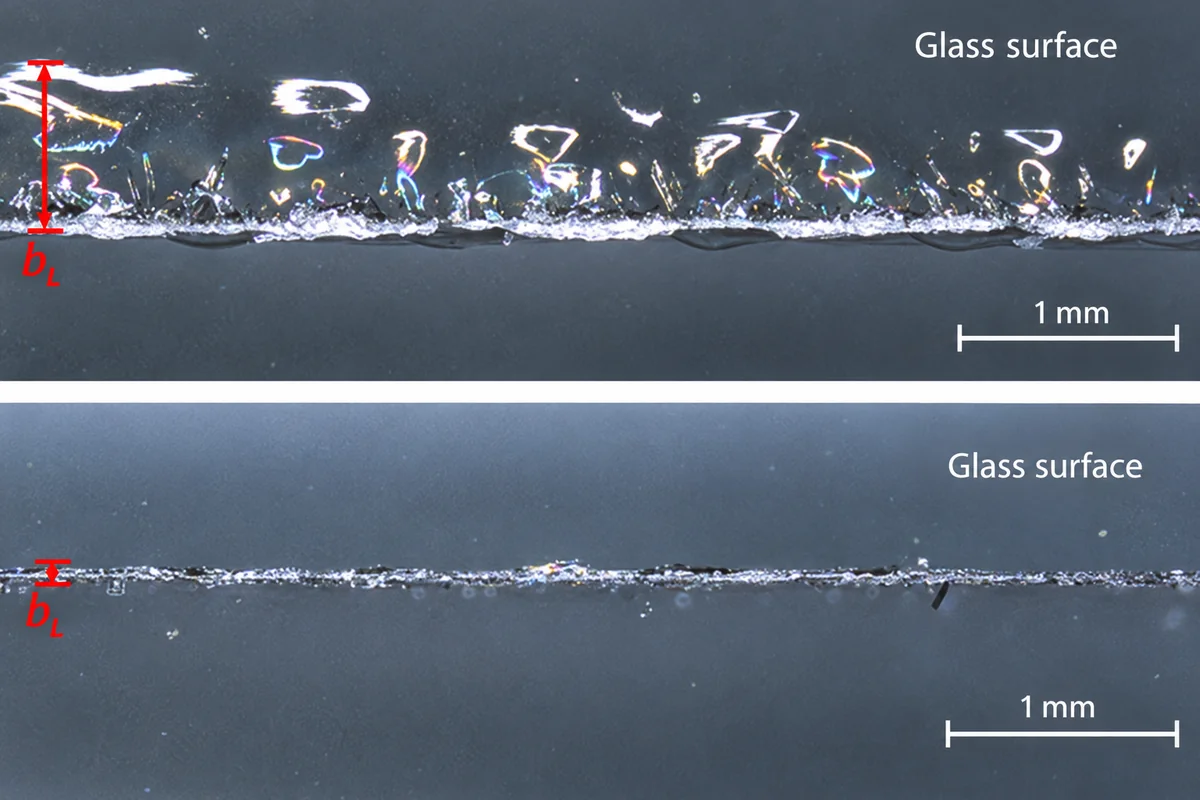
Chips, scratches, pits · Grinding marks and bright edges

Equipment
18+ CNC machining centers · Edging, drilling, grooving, polishing
Gallery
Get an edge finishing quote
Send the drawing with the edge type for each side, the glass and thickness, and which edges will be visible, and we will confirm the edgework and quote the parts.
Edge Types and When to Use Them
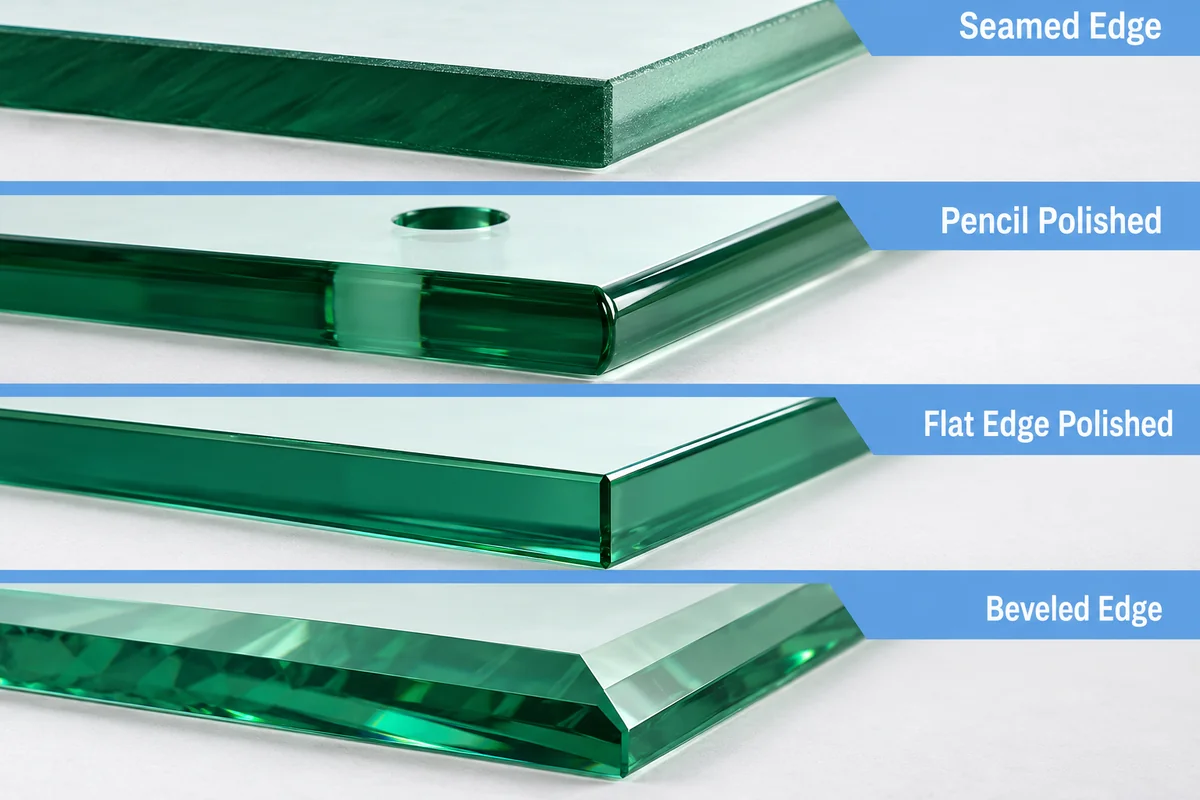
Seamed edge
The sharp arris is ground off with a quick pass. It is the fastest and lowest-cost edge, used where the edge sits inside a frame or gasket and is never seen or touched.
Flat ground edge
The edge is ground flat with a matte, satin finish. It suits edges that show but are not a design feature, such as panels in equipment housings.
Flat polished edge
Ground flat and then polished clear, with small chamfers on both corners. It is the standard for exposed edges on shelves, displays and showcases.
Pencil edge
A fully rounded profile that is comfortable to hold and touch, for hand-held covers, tabletops and appliance panels.
Beveled edge
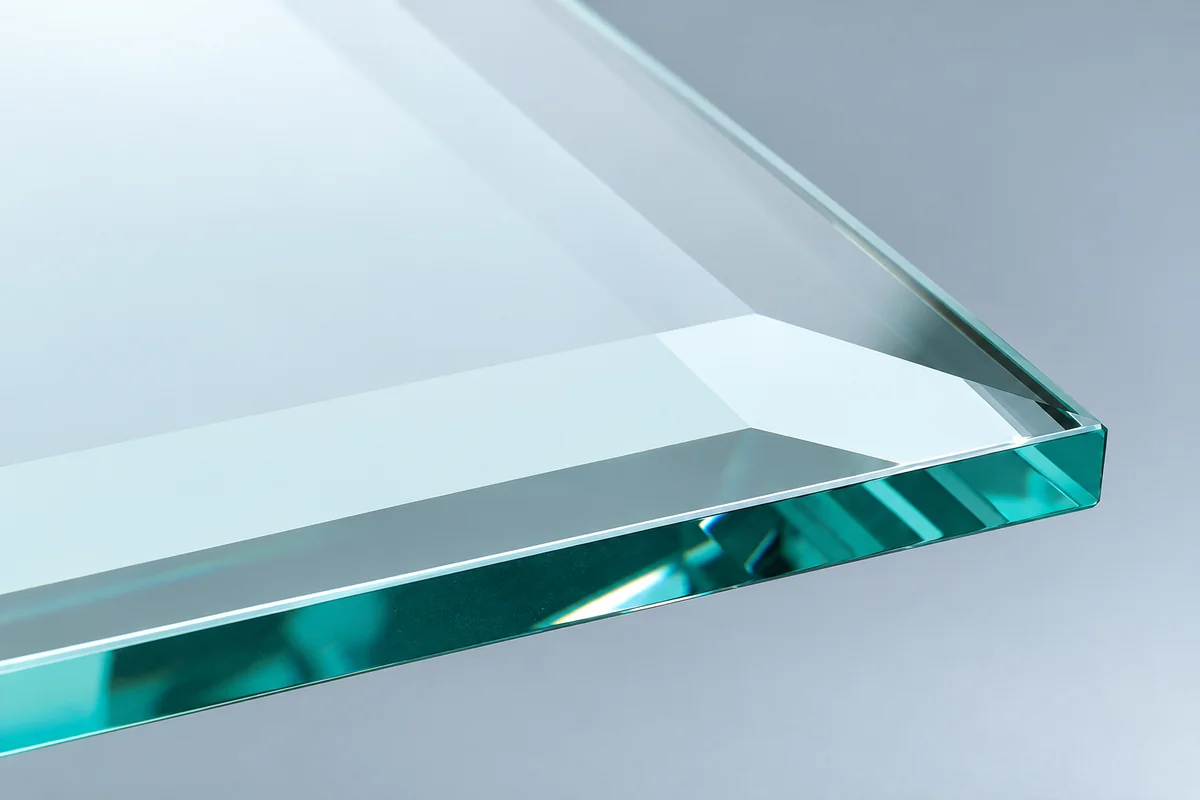
A wide, angled face ground along the edge for a decorative frame of light, on mirrors and display glass.
Chamfer and C-edge
Angled corners on both faces that resist chipping and break the sharp line of the edge, common on cover glass and panels handled often.
2.5D edge
An arc ground into the front edge of cover glass. Design it with glass at least 0.7 mm thick, a straight edge at least 0.3 mm wide, an arc angle between 7° and 15°, and an arc width under 2.0 mm.
Edge Finishing Capacity
| Parameter | Range |
|---|---|
| Glass thickness | 0.26–25 mm |
| Maximum size | 3600 × 2400 mm |
| Size tolerance after edging | ±0.1 mm |
| Edge types | Seamed, flat ground, flat polished, pencil, beveled, chamfered, C-edge, R-edge, 2.5D |
| Inspection | Chips, bright edges, scratches, pits, grinding marks and grinding patterns |
| Materials | Soda lime, low iron, borosilicate, aluminosilicate, Gorilla®, Dragontrail™, Panda, AR, AG and AF glass |
Choosing an Edge That Holds Up
Every cut edge gets at least a seamed finish before the glass is handled, strengthened or coated, because the chips left by cutting are where cracks start. From there, choose the edge by where it ends up: seamed or ground where it is hidden, polished where it is seen, pencil where it is touched, and chamfered where it is knocked.
Edgework is priced by profile, polish grade and tolerance, and by what sits near the edge: holes and cutouts close to it, small inside radii, asymmetric outlines and very thin glass all add time. Mark the edge type for each side on your drawing. Polishing only the edges that show, and seaming the rest, can take a large share off the edging cost. Where a drawing uses SAE J673 edge designations, we work to them.