
Curved & Bent Glass
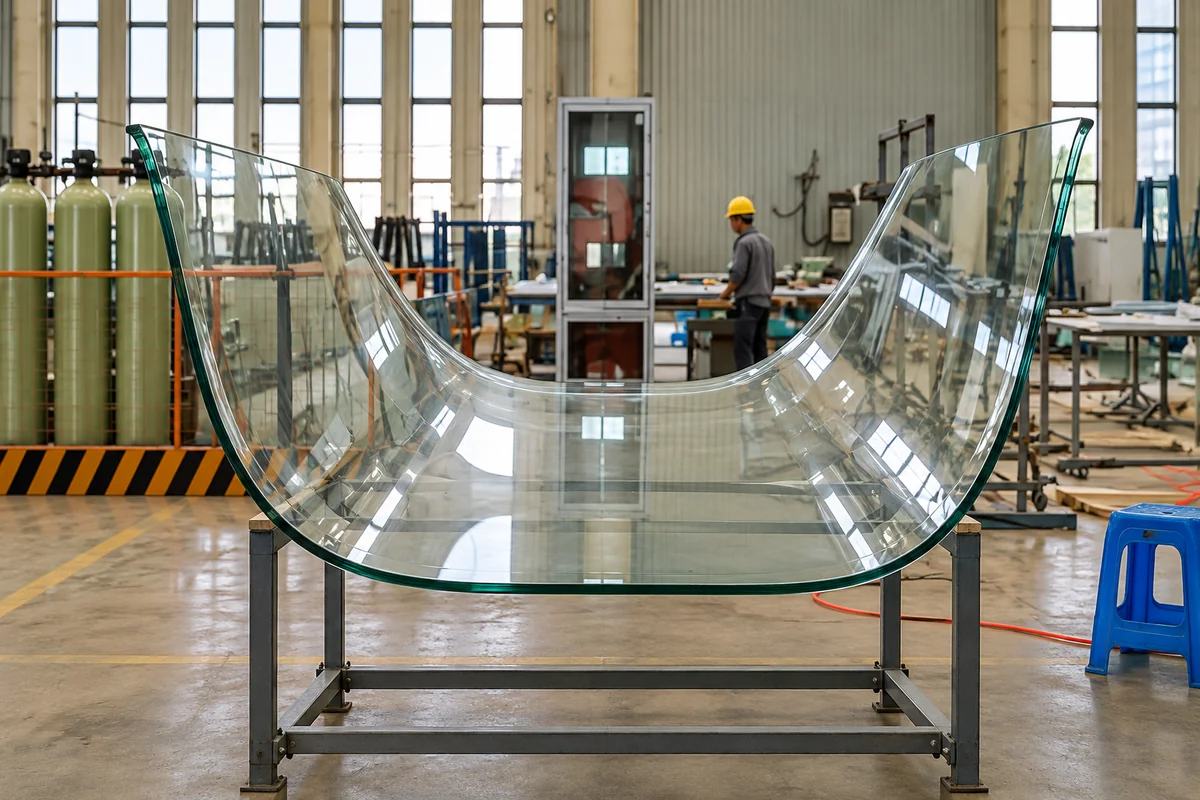
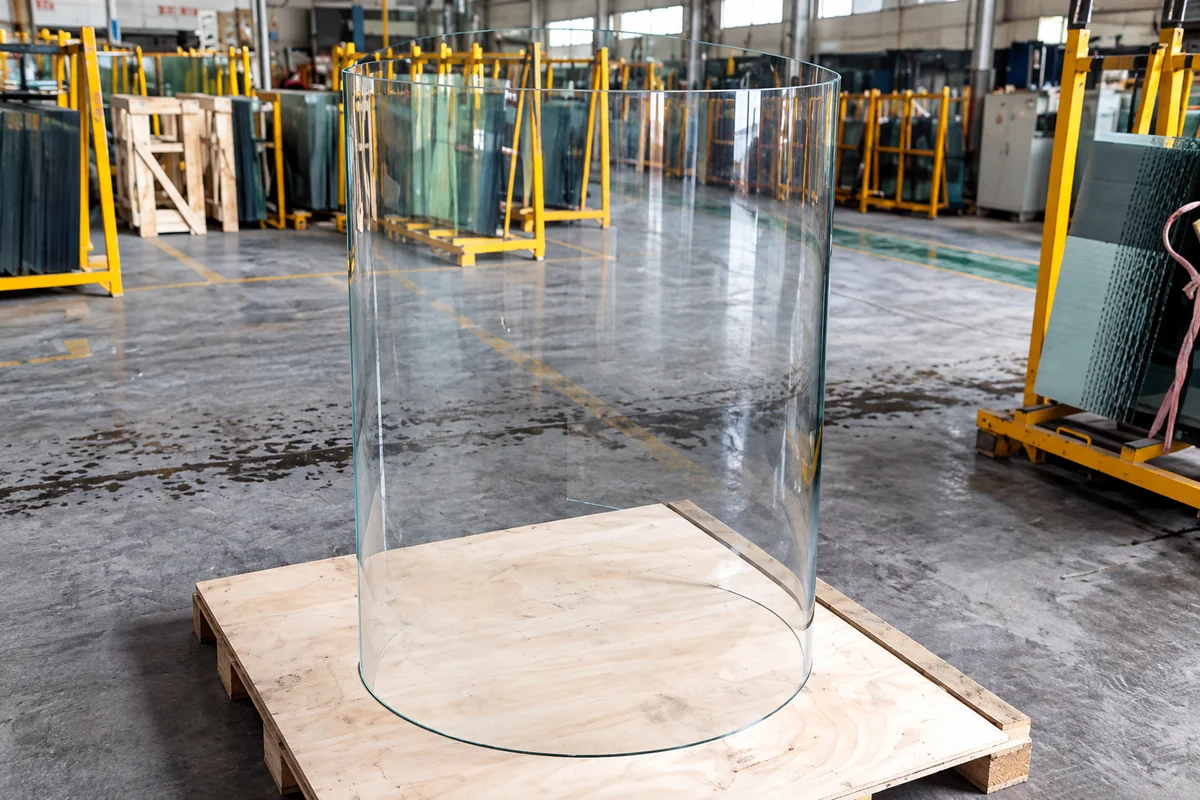
Curved and bent glass is flat glass heated to its softening point, formed over or between molds, and then tempered or strengthened to lock in the shape. We bend glass from 0.7 to 19 mm thick and from 50 × 50 mm up to 2800 × 6000 mm into cylindrical, conical, spherical and custom curves, with bend angles up to 160°.
Capabilities
Thickness
0.7–19 mm · Thin parts chemically strengthened

Size
From 50 × 50 mm · Up to 2800 × 6000 mm

Bend angle
Up to 160° on 2–12 mm · Up to 145° on 13–19 mm

Shapes
Cylindrical, conical, spherical · Parabolic, elliptical, with flat legs
Strength
10,000 psi surface compression · 9,700 psi at the edge

Glass
Float, low iron, borosilicate · Gorilla®, AGC, tinted
Gallery
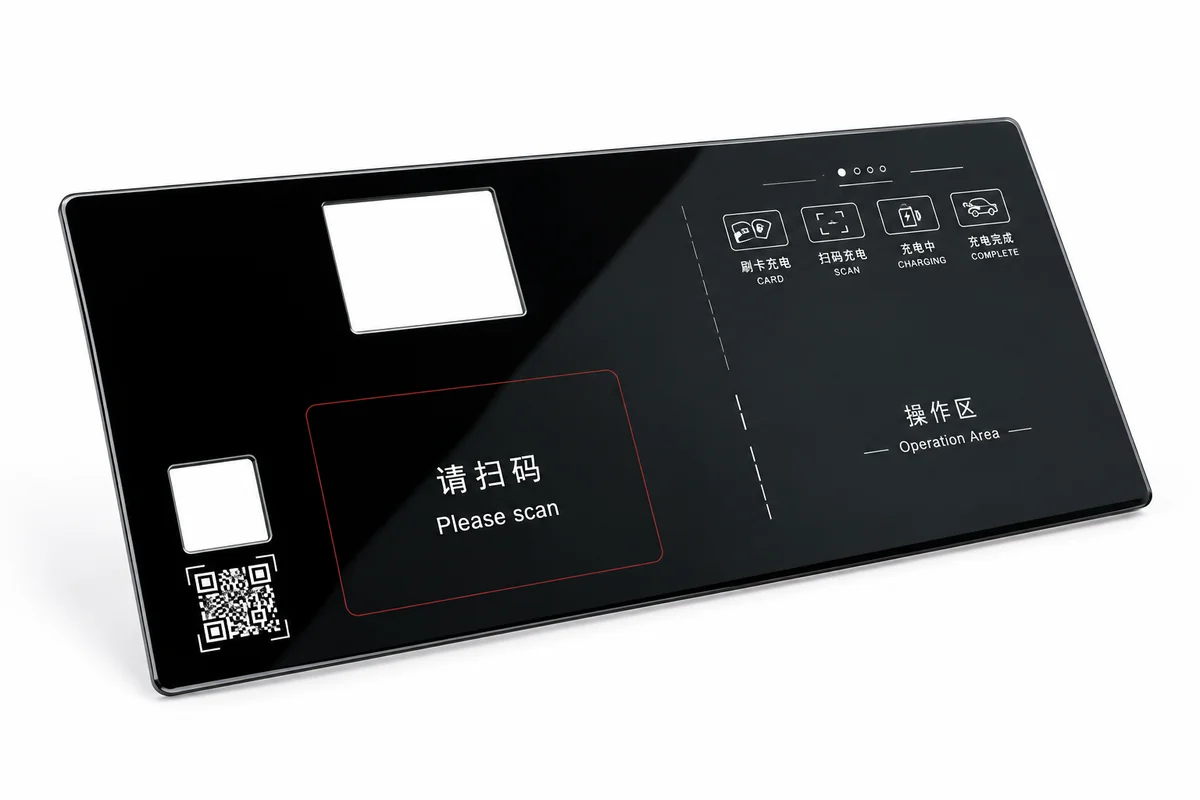
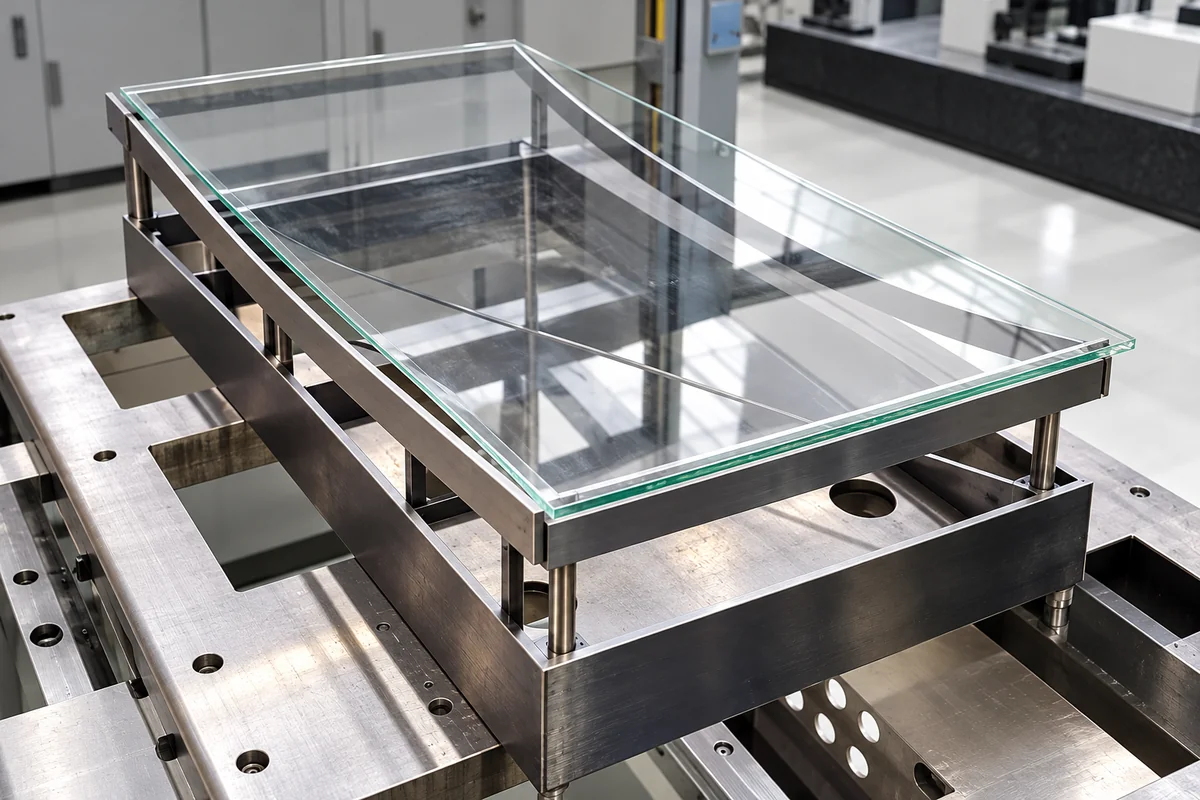
Get a curved glass quote
Send the thickness, radius, chord or girth, angle and height, and which surface they are measured on, and we will confirm the bending method and quote the panels.
Choose the Bending Method
The shape, size and thickness decide how the glass is bent.
Gravity sag bending
The heated sheet sags over a mold under its own weight. It suits large panels and gentle cylindrical curves, with less control over the exact profile.
Press bending
The softened glass is pressed between matched molds. It holds tighter and more complex curves, on smaller panels, and needs a mold for each shape.
Bend and temper in one pass
The glass is bent on rollers and quenched straight away. It gives consistent cylindrical curves at high volume and is the standard route for curved tempered panels.
Thin glass, 0.7–2 mm
Too thin to thermally temper, so it is hot bent and then chemically strengthened, for curved display covers and wearables.
Laminated curved glass
Two bent plies laminated together. A broken panel holds together in the frame, for overhead, guarding and display-case use.
Bend Before You Temper
Tempered glass cannot be bent: its stress balance is fixed, and forcing a curve shatters it. Every step that changes the glass happens in this order.
- 01
Cut, drill and edge flat
Holes, cutouts and edge work are finished while the glass is flat and annealed.
- 02
Print ceramic ink
Borders and graphics in ceramic ink are printed flat and fuse into the surface during heating.
- 03
Heat and bend
The glass is heated to its softening point and formed over or between molds.
- 04
Temper or strengthen
Thick glass is quenched with air from about 620 °C; thin glass is chemically strengthened after bending.
- 05
Check the profile
Each panel is checked against a template of the curve before packing.
How to Dimension a Curved Part
A curve is defined by its radius, chord (the straight width across it), girth (the length along the arc), depth, bend angle and height. Two of radius, chord, girth and angle fix the arc, so give those plus the height and thickness, and any flat legs.
Then state the surface each figure is measured on: convex, concave or centerline. The two faces differ by the glass thickness. On 10 mm glass bent to a 1000 mm concave radius, the convex radius is 1010 mm, and over a 90° bend the convex girth is about 16 mm longer than the concave one. That is enough to stop a panel from fitting its frame.
Bend angles run up to 160° on 2–12 mm glass and up to 145° on 13–19 mm. Send the radius and size, and we will confirm whether the curve needs a gravity, press or roller process.
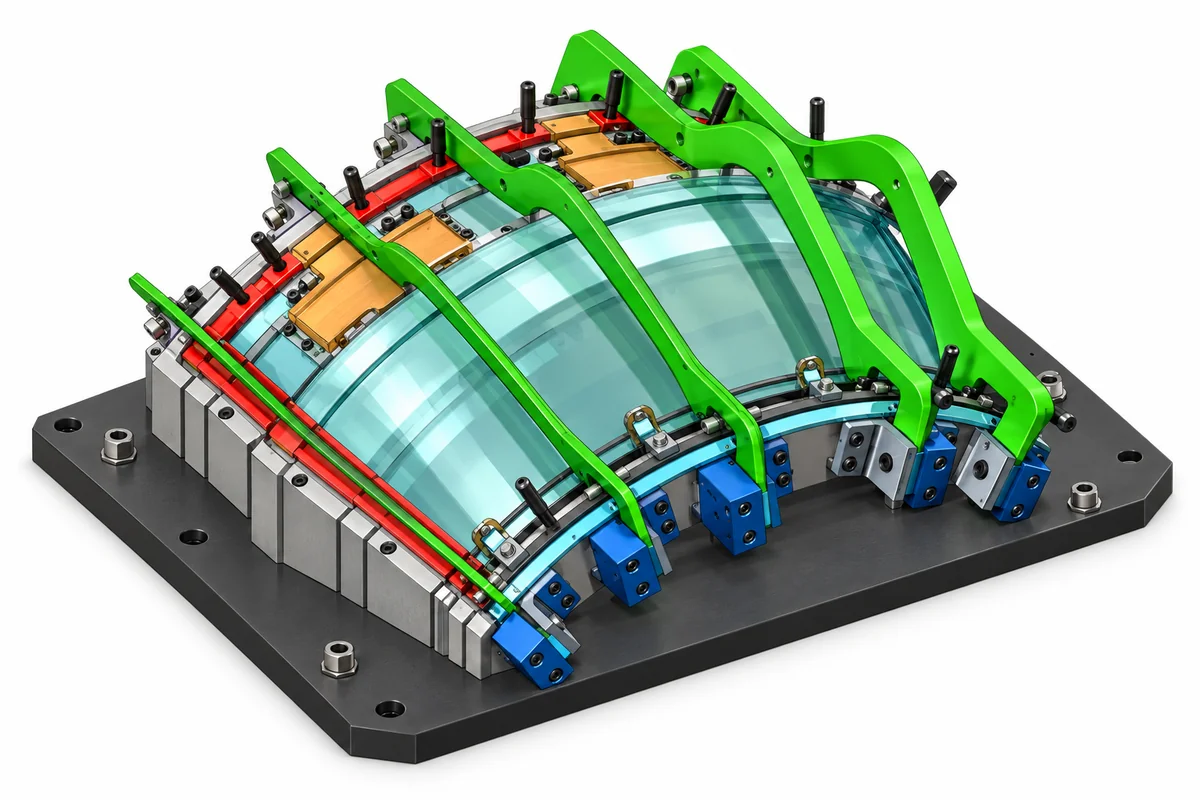
Curved Glass Questions
Is bent glass the same as curved glass?
Yes, the terms mean the same thing. Both differ from 2.5D cover glass, which stays flat and has only its edges ground into an arc.
Which glass types can be curved?
Float and low iron glass, borosilicate, Gorilla® and AGC cover glass, and tinted glass in green, bronze and grey. Curved panels can also carry AR, AF and other coatings.
What is used for PC cases, fireplace doors and EV chargers?
Typically 5–8 mm soda lime glass, hot bent on one side and then fully tempered. For fireplace and stove doors, check the operating temperature against the service limit of tempered glass before choosing it over ceramic glass.
Which standards apply?
Curved tempered glass for buildings is made to ANSI Z97.1 in the US or EN 12150 in Europe. Name the standard on your drawing so the right tests and markings are applied.