
Longpass Filters
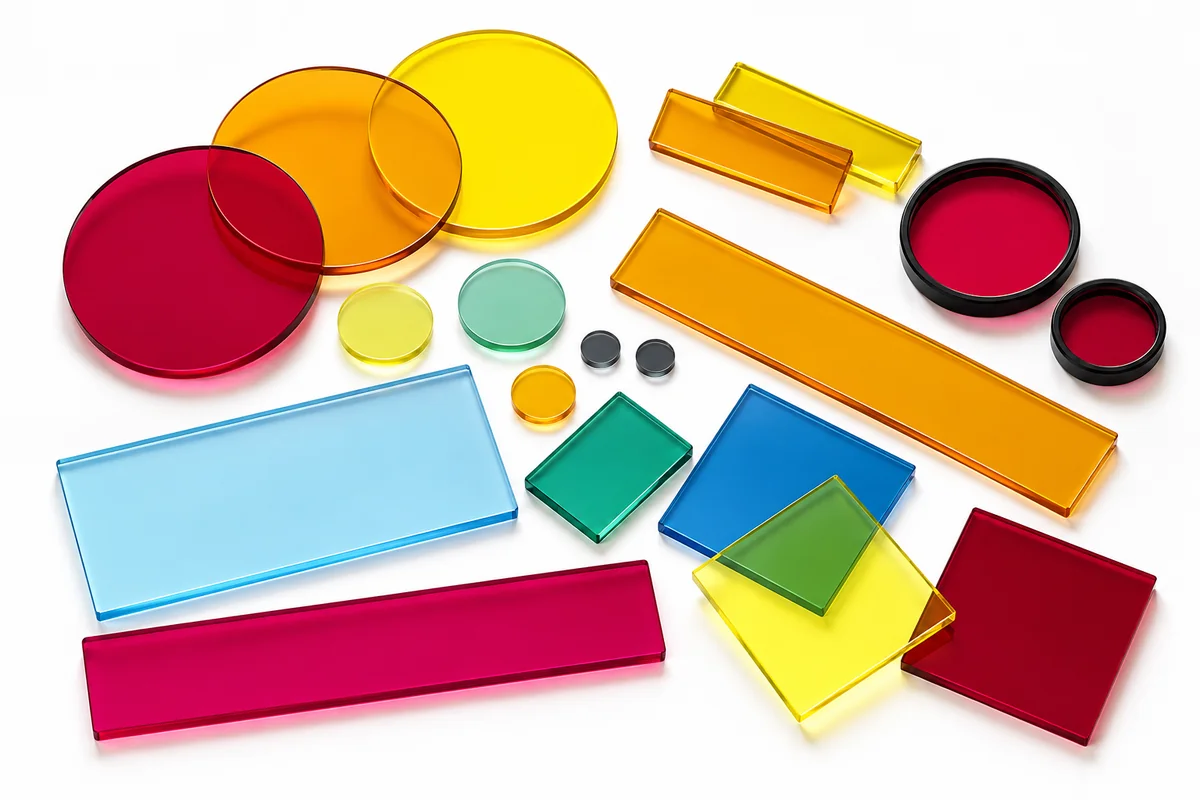
Longpass filters transmit wavelengths above a set cut-on point and block the shorter ones. We supply them with 50% cut-on points from 170 nm to 1850 nm: UV-blocking visible-pass filters, near-IR longpass filters for silicon cameras, SWIR and infrared types, and AR-coated protective windows, all double-side polished and available mounted or unmounted.
Capabilities

Cut-on range
170 nm to 1850 nm · 50% transmission point
Peak transmission
≥98% on AR-coated windows · ≥90% on NIR and SWIR filters

Substrates
Fused silica, sapphire, Borofloat® · Glass or acrylic windows

Surface quality
Double-side polished · 40/20 scratch-dig

Coatings
Anti-reflection · Oleophobic

Mounting
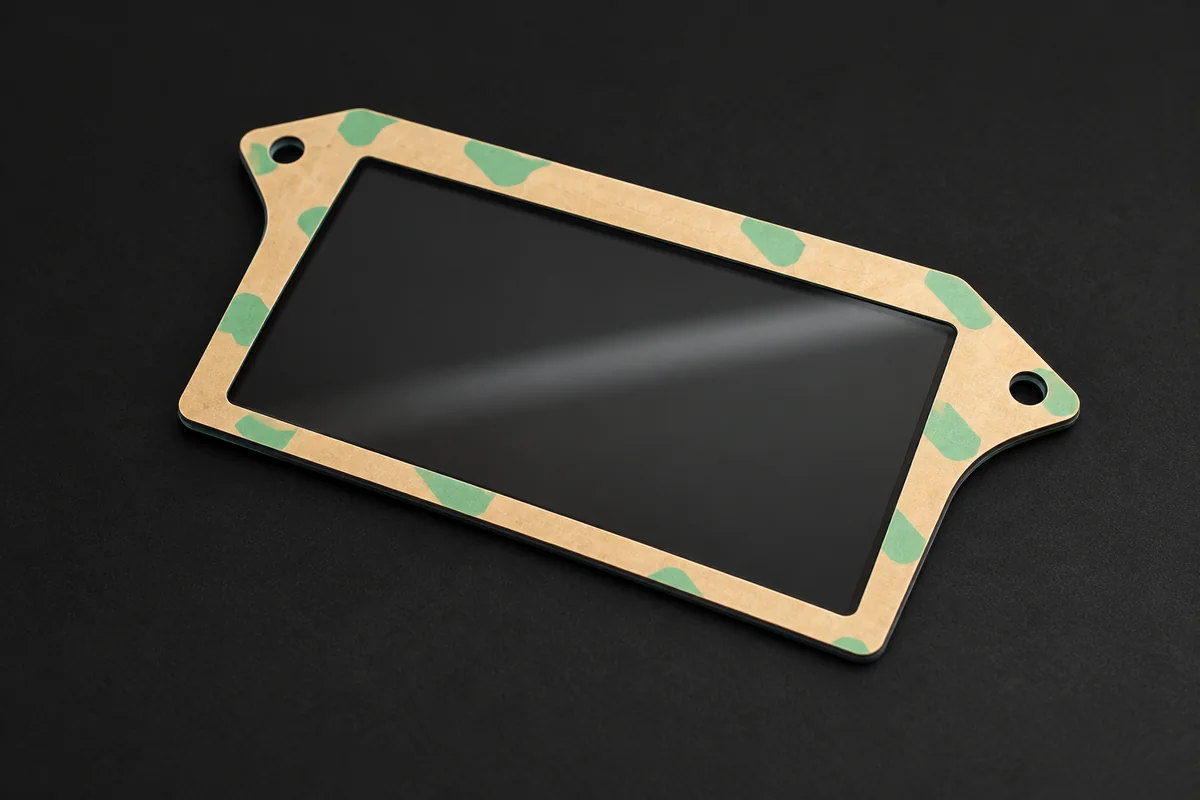
Threaded, C-mount, slip · Unmounted with printing or VHB
Gallery
Get a longpass filter quote
Tell us the wavelength you need to pass, your detector and the mount, and we will match a cut-on point or quote a custom filter.
Standard Cut-On Wavelengths
Each standard filter is named by its 50% cut-on wavelength; the useful range is where it reaches its rated peak transmission.
| Type | Cut-on (50%) | Useful range | Peak transmission |
|---|---|---|---|
| Fused silica window | 170 nm | 200–2300 nm | 85% |
| Fused silica window, multilayer visible AR | 170 nm | 380–900 nm | 98% |
| Sapphire window | 190 nm | 250–2300 nm | ≥90% |
| Borofloat® window, visible AR + oleophobic | 340 nm | 350–1100 nm | ≥98% |
| Visible + NIR AR window | 380 nm | 400–1100 nm | ≥98% |
| UV block, visible pass | 415 nm | 415–1100 nm | ≥98% |
| Near-IR longpass | 695, 715, 780, 800, 815, 830, 850 nm | 10–20 nm above cut-on to 1100 nm | ≥90% |
| Visible-block SWIR longpass | 920 nm | 930–2300 nm | ≥90% |
| SWIR longpass | 1000, 1070, 1475 nm | 10–30 nm above cut-on to 2300 nm | ≥90% |
| Infrared longpass | 1850 nm | 1900 nm–12 µm | ≥90% |
Other cut-on points, sizes and shapes are made to order.
How to Read a Longpass Specification
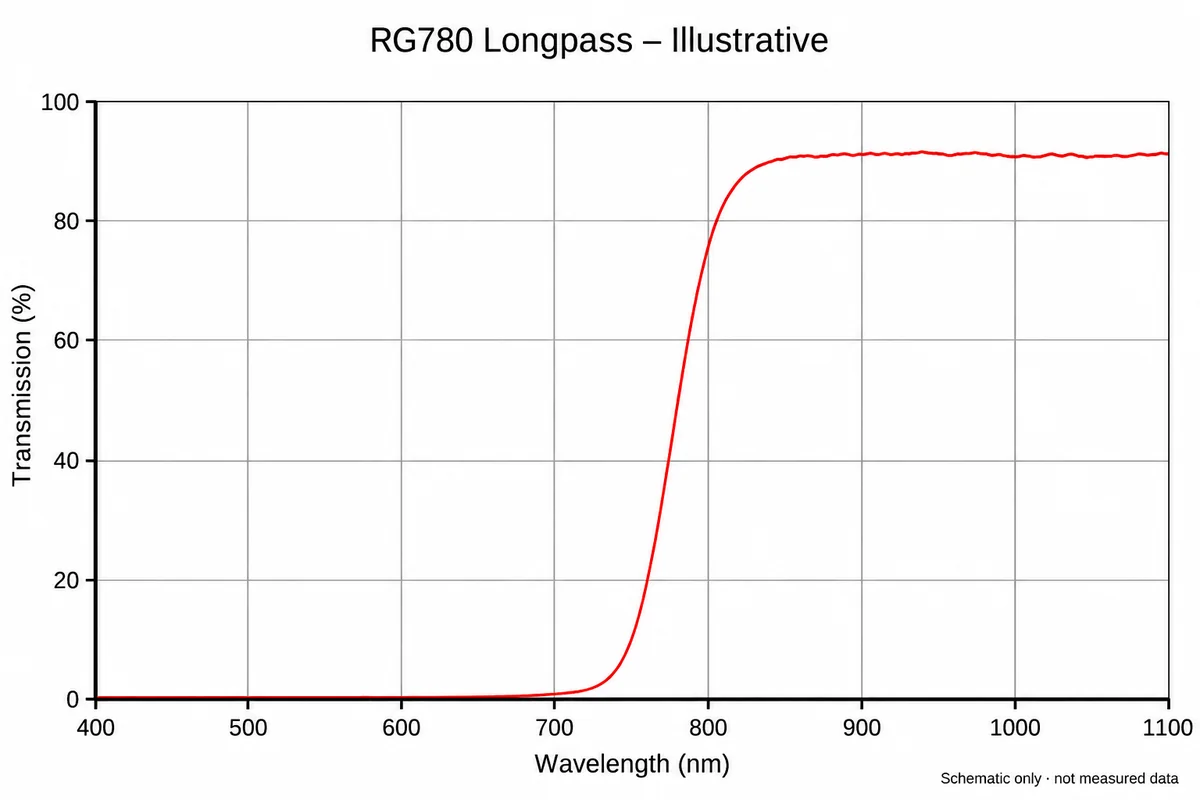
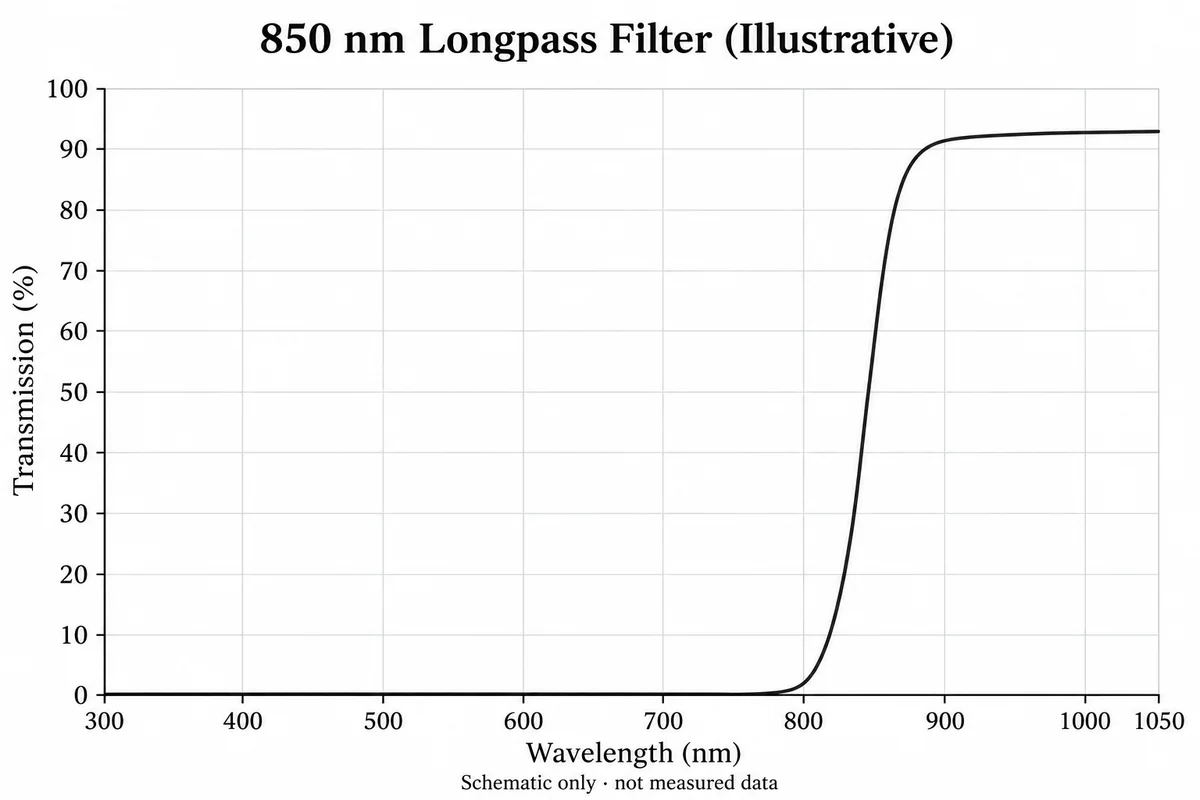
The cut-on number marks the 50% transmission point, not the start of full transmission. On our near-IR filters, rated transmission of 90% or more begins 10–20 nm above the cut-on: the LP850 passes 50% at 850 nm and reaches its full rating at 870 nm. If your illumination sits at 850 nm, an LP850 cuts into the LED band; the LP780 or LP800 passes all of it.
The upper end of the useful range follows the detector the filter is designed for. Near-IR types are specified to 1100 nm, where silicon camera sensors stop responding; SWIR types run to 2300 nm, and the LP1850 transmits out to 12 µm for thermal sensing.
On coated filters, the edge moves to shorter wavelengths as the angle of incidence increases. On a wide-angle lens, leave a margin between the cut-on and your signal, or use an absorbing filter glass, whose edge does not shift with angle.
Which Longpass Filter Fits Your System?
Choose the cut-on from what your detector needs to see and what it must not see.
Visible camera without UV
The LP415 blocks UV below 415 nm and passes 415–1100 nm at 98% or more. If the camera also needs near-IR, the LP389 window passes 400–1100 nm.
Near-IR imaging on silicon sensors
Pick a filter whose useful range starts below the short end of your LED band: the LP780 or LP800 for 850 nm illumination, the LP695 or LP715 to remove visible light while keeping deep red.
SWIR detectors
The LP920 blocks all visible light and passes 930–2300 nm. The LP1000, LP1070 and LP1475 move the edge further into the SWIR to isolate a band.
Thermal and mid-infrared
The LP1850 passes 1900 nm to 12 µm for thermal sensors and IR instruments.
Fluorescence and laser lines
Set the cut-on between the excitation or laser line and the emission, so the shorter line is blocked and the signal passes.
Protective windows
The substrate sets the shortest wavelength: fused silica from 170 nm, sapphire from 190 nm, Borofloat® from 340 nm. Sapphire suits fronts exposed to abrasion.
Coatings, Bandpass Pairs and Mounting
AR coating and its trade-off
An uncoated fused silica window (LP170) transmits from 200 to 2300 nm with an 85% peak. The multilayer visible AR version (LP171) raises the peak to 98%, but its useful range narrows to 380–900 nm. We design the AR coating for the band your system uses, not the widest band the substrate allows.
Oleophobic coating
On exposed windows, an oleophobic layer over the AR coating resists fingerprints and makes cleaning easier. The LP286 Borofloat® window combines visible AR and oleophobic coatings at 98% peak transmission.
Building a bandpass from two edges
A longpass filter sets the lower edge of a passband and a shortpass filter sets the upper edge. Pairing the two gives a custom window when no standard bandpass filter matches, and each edge can be moved independently.
Mounting and supply
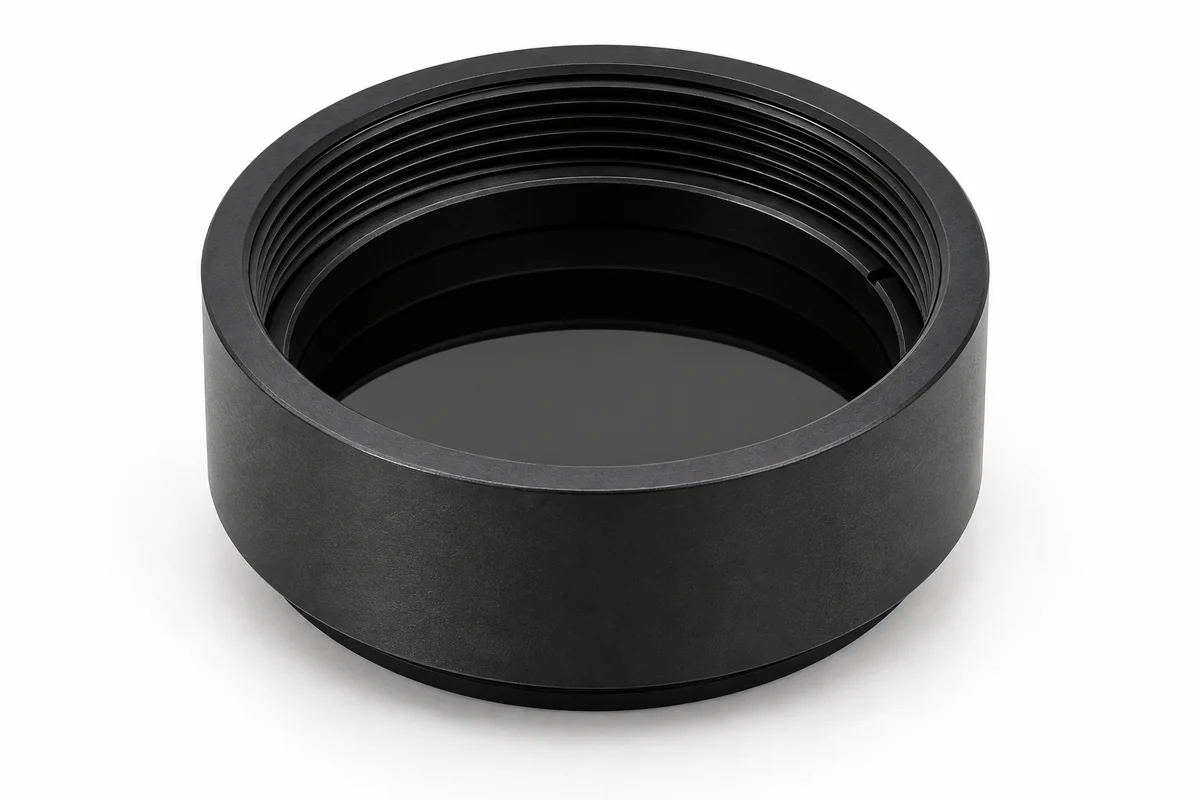
Filters ship in black anodized threaded rings, C-mounts that fit between lens and sensor, slip mounts for unthreaded lenses, or custom sizes. Unmounted windows can be supplied with printed borders and VHB adhesive for direct bonding to housings, in glass or acrylic.
Measurement and lead time
Every part ships with a transmission and reflection scan from our spectrophotometers. Prototypes typically ship in 1–2 days, and custom production takes 3–4 weeks.