
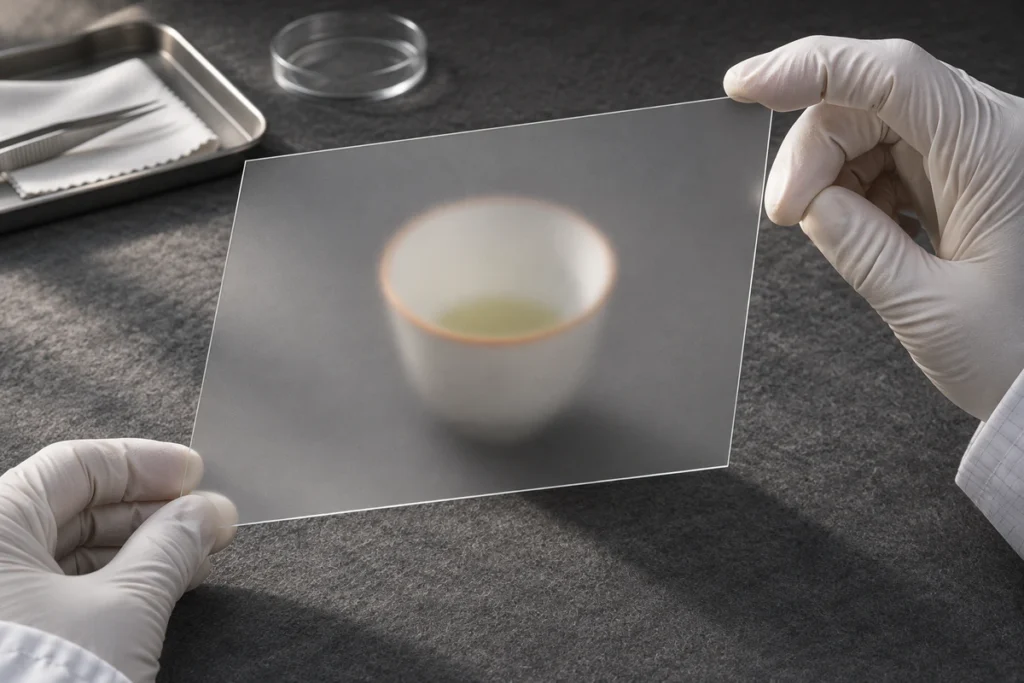
Anti-Glare Glass Parameters: Gloss, Haze and Types Explained
What gloss, haze, transmittance, roughness and sparkle mean on an anti-glare glass datasheet, how they trade off, and how etched, sprayed and film AG differ.
What gloss, haze, transmittance, roughness and sparkle mean on an anti-glare glass datasheet, how they trade off, and how etched, sprayed and film AG differ.
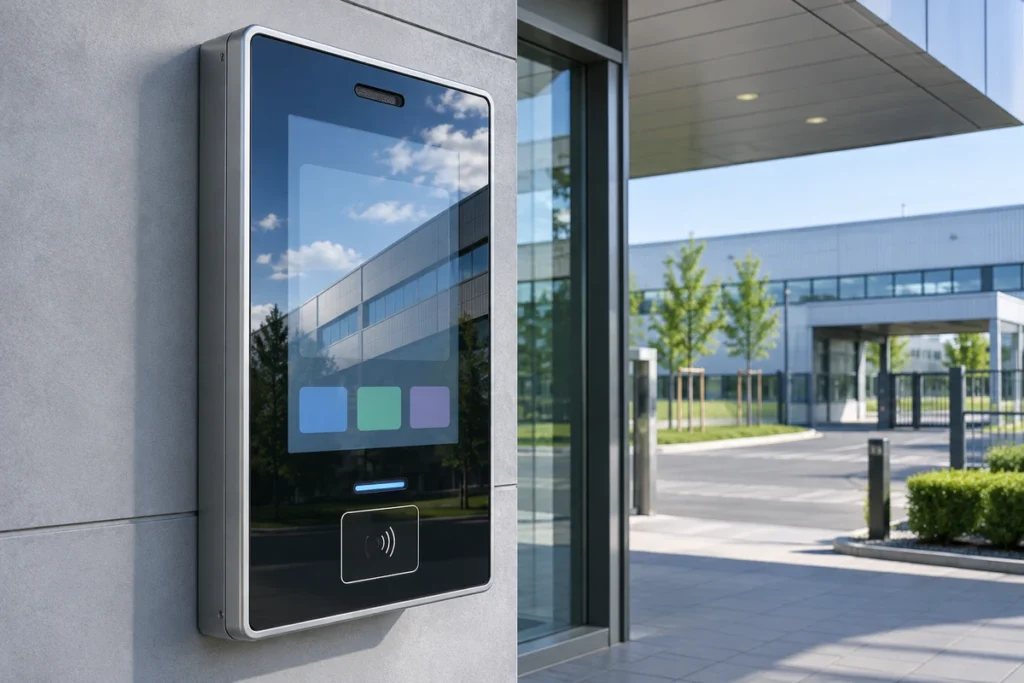
Anti-glare glass blurs reflections; anti-reflective glass removes most of them. Learn how each works, where each fits, and how to compare samples yourself.
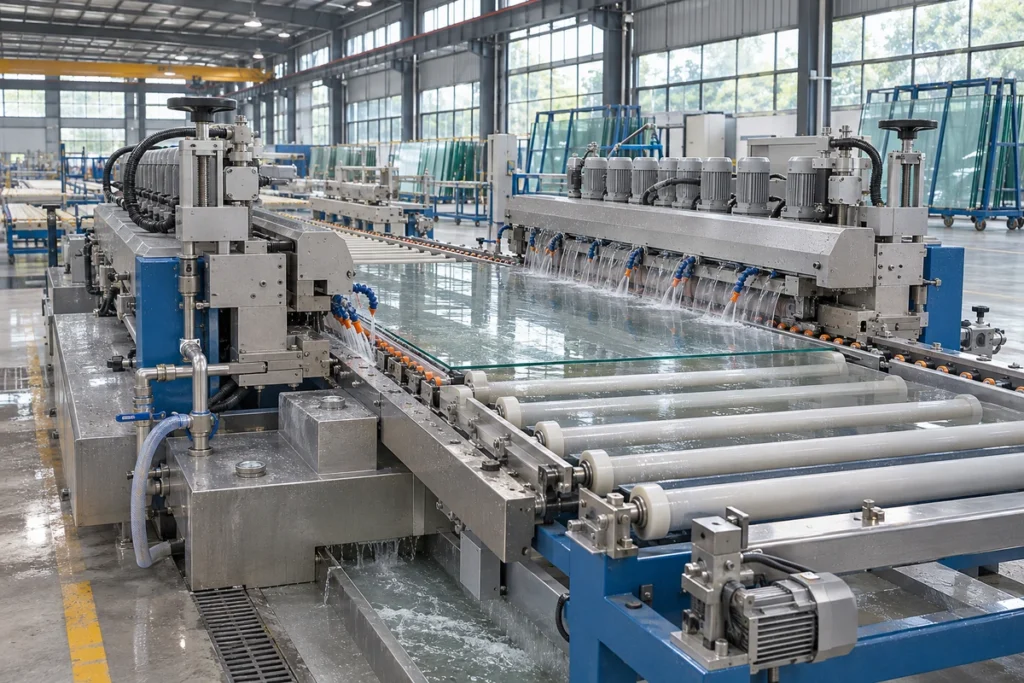
Seamed, flat, chamfered, pencil, beveled and 2.5D edges: what each cover glass edge looks and feels like, where it fits, and how to choose.
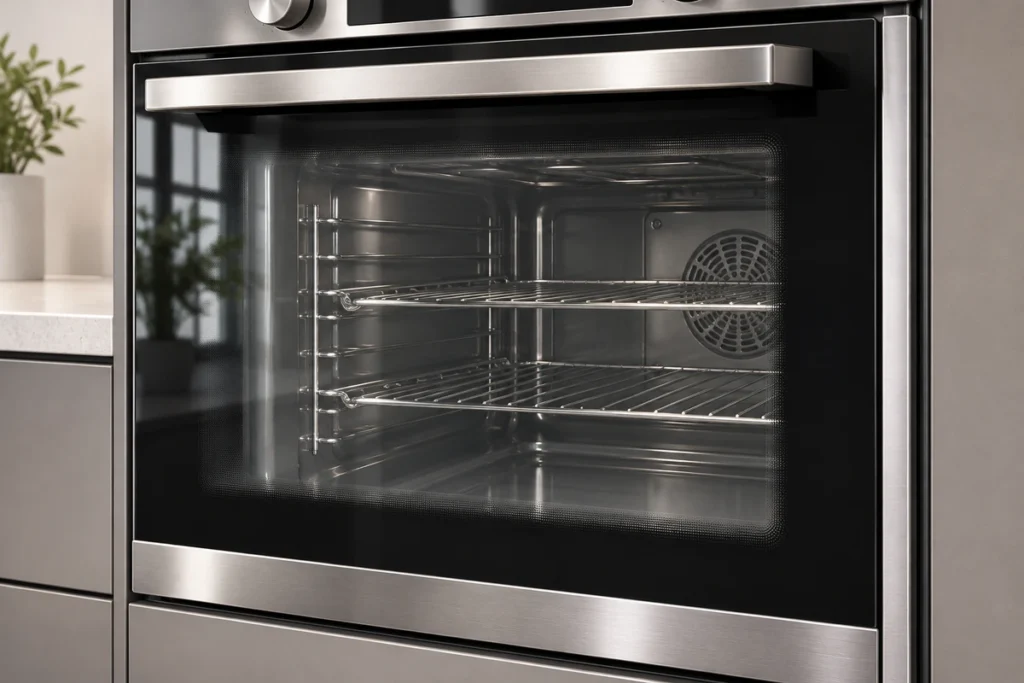
Ceramic ink fuses into glass and lasts for decades, but it needs high heat. Learn how it pairs with tempered and chemically strengthened glass, and when to use organic ink.

How a custom display cover glass project runs: the decisions to make, what happens during sampling, why samples cost more, and what drives price in production.

Why custom cover glass samples cost more per piece than production, what each part of a sample fee covers, which costs are one-time, and how to keep them down.

Glass or acrylic for a touch panel cover? Compare touch sensitivity, scratching, weight, heat, cleaning and safety, with a simple way to decide for your product.
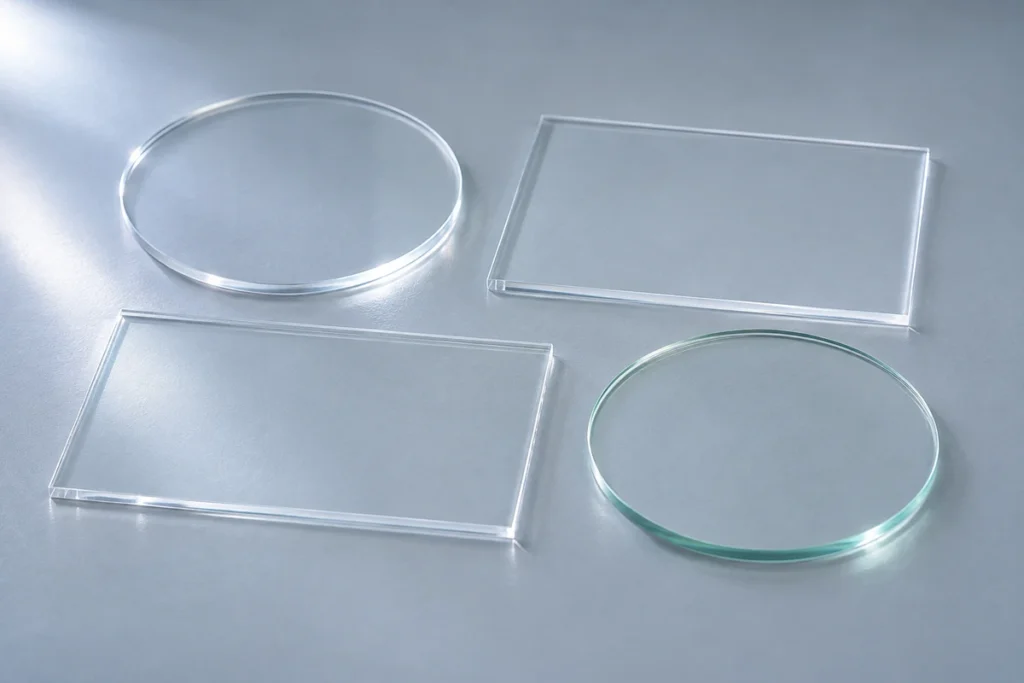
Soda-lime, low-iron, aluminosilicate, borosilicate, glass-ceramic, fused silica or sapphire? Match the glass to the job, with a plain guide by application.
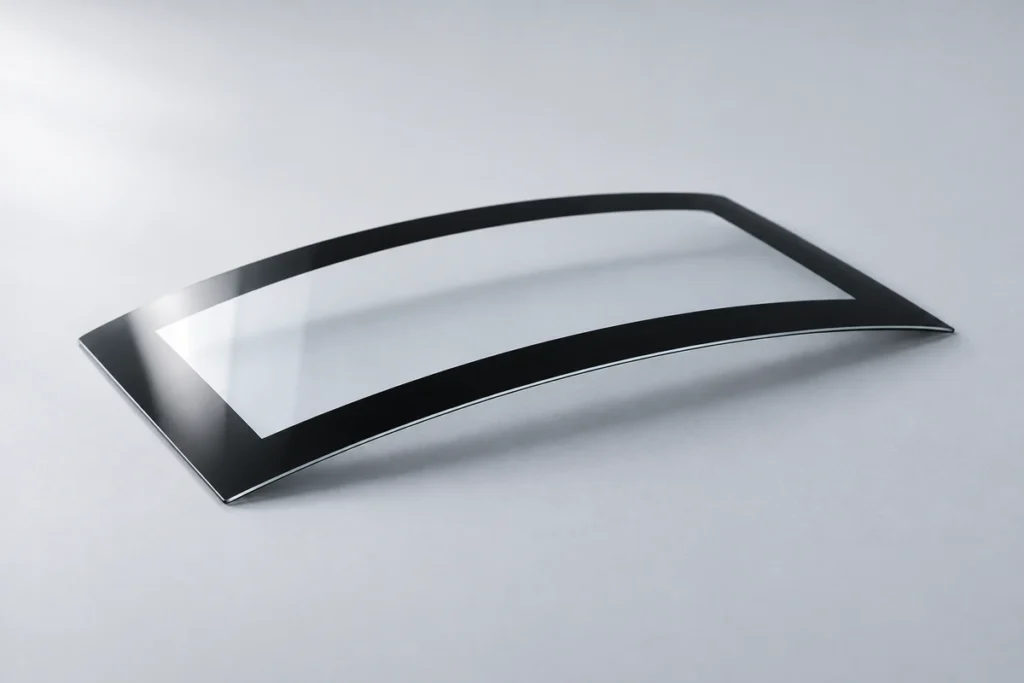
3D cover glass is curved across its surface, not just at the edges. Learn how it's made, why it costs more than 2.5D, and when cold-formed glass is the better route.
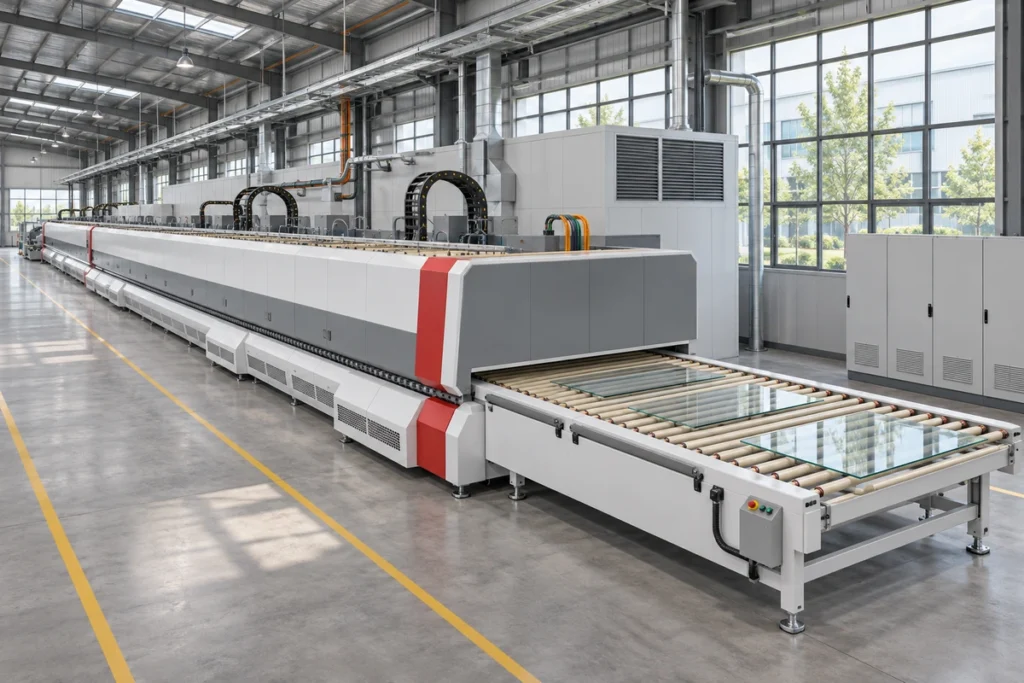
Soda-lime is a type of glass; tempered is a treatment. Compare annealed and tempered soda-lime glass on strength, breakage, heat, cutting and cost.