
Antimicrobial Glass
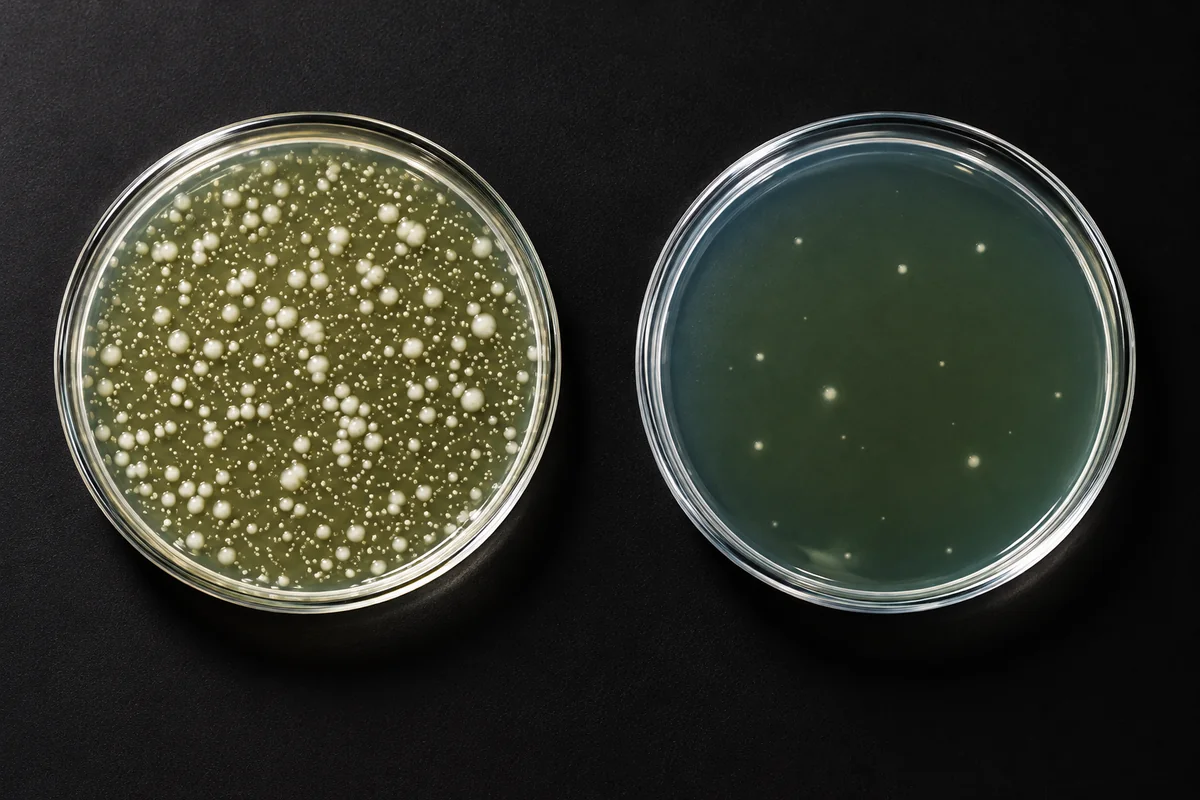
Antimicrobial glass carries silver and copper ions in its surface that inhibit bacterial growth on the glass, with an antimicrobial activity value R of 2 or more, a reduction of over 99%. We make it in soda lime and aluminosilicate glass from 0.33 to 4.0 mm, thermally or chemically tempered, for medical device touch panels and public displays.
Capabilities

Treatment
Ag⁺ and Cu⁺ ion exchange · Embedded in the surface

Antimicrobial activity
R ≥ 2.0 · Over 99% reduction

Glass
Soda lime, aluminosilicate · 0.33–4.0 mm

Strengthening
Thermal or chemical · Strength change within ±50 MPa

Optics
Transmission change under 1% · Color difference under 1

Finishing
Withstands 600 °C · AR and AF compatible
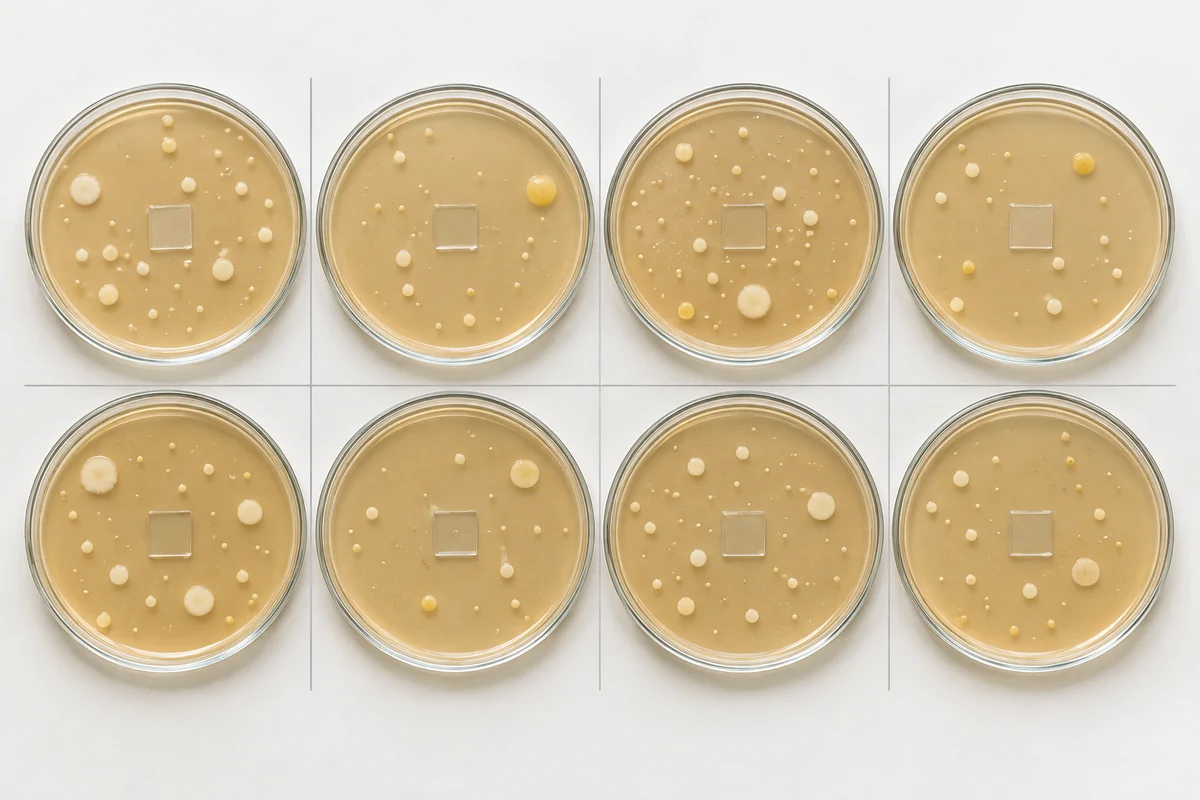
Gallery
Get an antimicrobial glass quote
Send your drawing, glass type and thickness, other coatings or printing, and the test standard you need reported, and we will confirm the treatment route.
How Glass Is Made Antimicrobial
Plain glass is not antimicrobial; it is only easy to clean. The activity comes from ions or a coating added to the surface, and the method decides how long it lasts.
Ion exchange (our method)
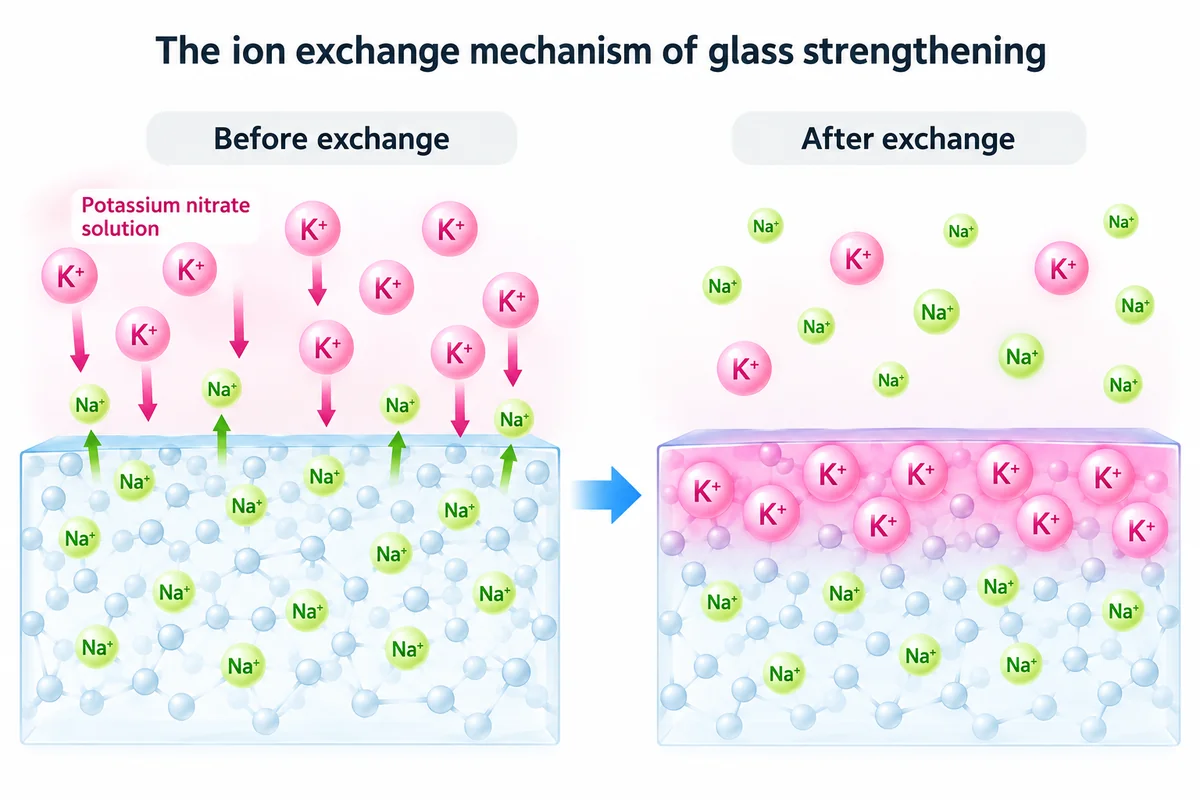
Silver and copper ions replace sodium ions in the glass surface, in a bath similar to chemical strengthening. Nothing sits on top to wear off, so the activity survives repeated wiping and cleaning.
Fired-in coating
A sol-gel layer containing silver is fired at about 600 °C into the surface. It bonds well but adds a separate layer to the glass.
Sprayed or wiped coatings
Silver or quaternary ammonium coatings applied at room temperature. They cost least and typically last from 6 months to 3 years before wearing away.
Photocatalytic TiO₂
A titanium dioxide layer becomes active under UV light. Inside an enclosure or under indoor lighting with little UV, it has little effect.
What an Antimicrobial Rating Means
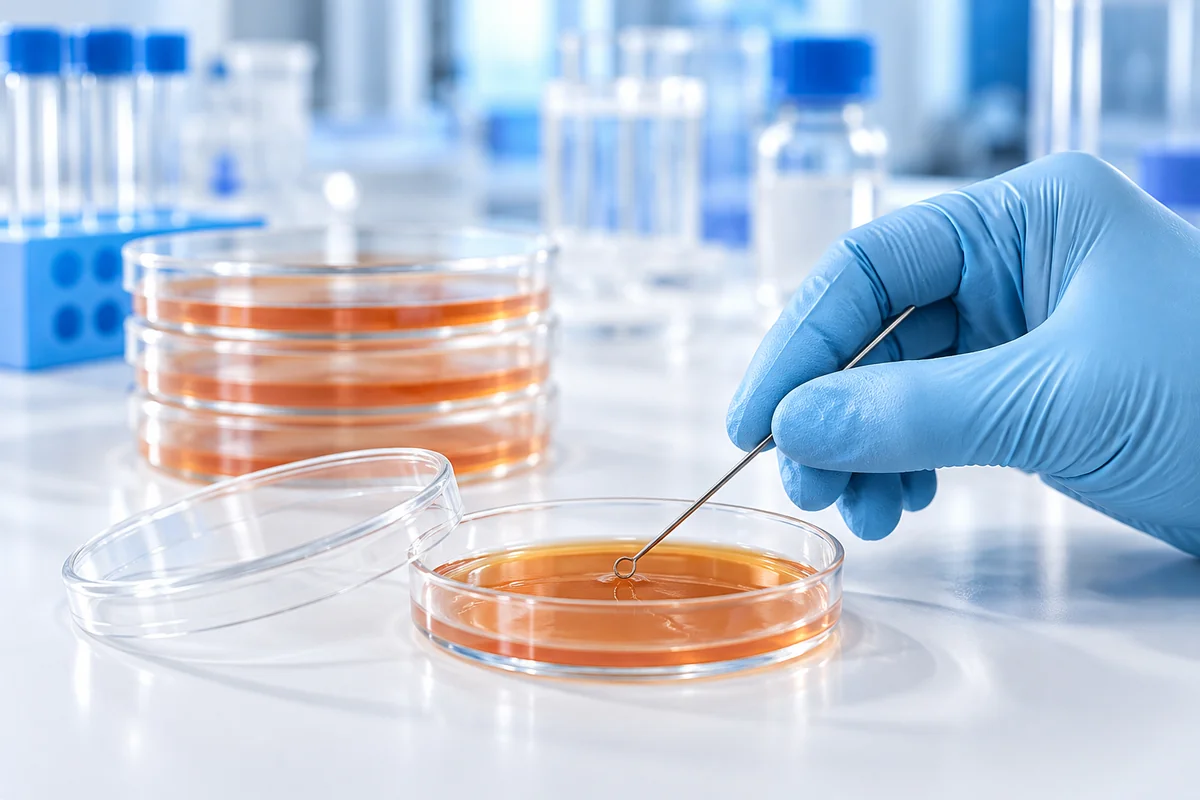
Antimicrobial glass is rated by its activity value R, measured under ISO 22196 or JIS Z 2801. Bacteria are held on treated and untreated samples for 24 hours, and R is the difference between the two counts on a log scale. R = 2 means 99% fewer bacteria than on plain glass, R = 3 means 99.9%, and R = 4 means 99.99%.
A percentage on its own does not tell you how it was measured. Ask for the R value, the standard, and the organisms tested, usually E. coli and S. aureus, and have the test run on the finished part with every coating and print it will carry, since an AF layer sits between the surface and the bacteria.
Specification and Finishing
Glass and thickness
Soda lime and aluminosilicate cover glass from 0.33 to 4.0 mm, thermally tempered or chemically strengthened. Aluminosilicate suits thin touch covers that need chemical strengthening; soda lime suits thicker, thermally tempered panels.
What the treatment changes
Compared with the same strengthened glass untreated, compressive stress shifts by up to ±50 MPa, the strengthened layer by about 1 µm, and transmission by less than 1%, with no measurable change in hardness and a color difference below 1. The treated surface withstands 600 °C and over 100,000 abrasion cycles.
Printing, AR and AF
Treated glass can be screen printed and AR or AF coated like standard cover glass. Specify the full stack when you order, so the antimicrobial test reflects the finished surface.
Where it is used
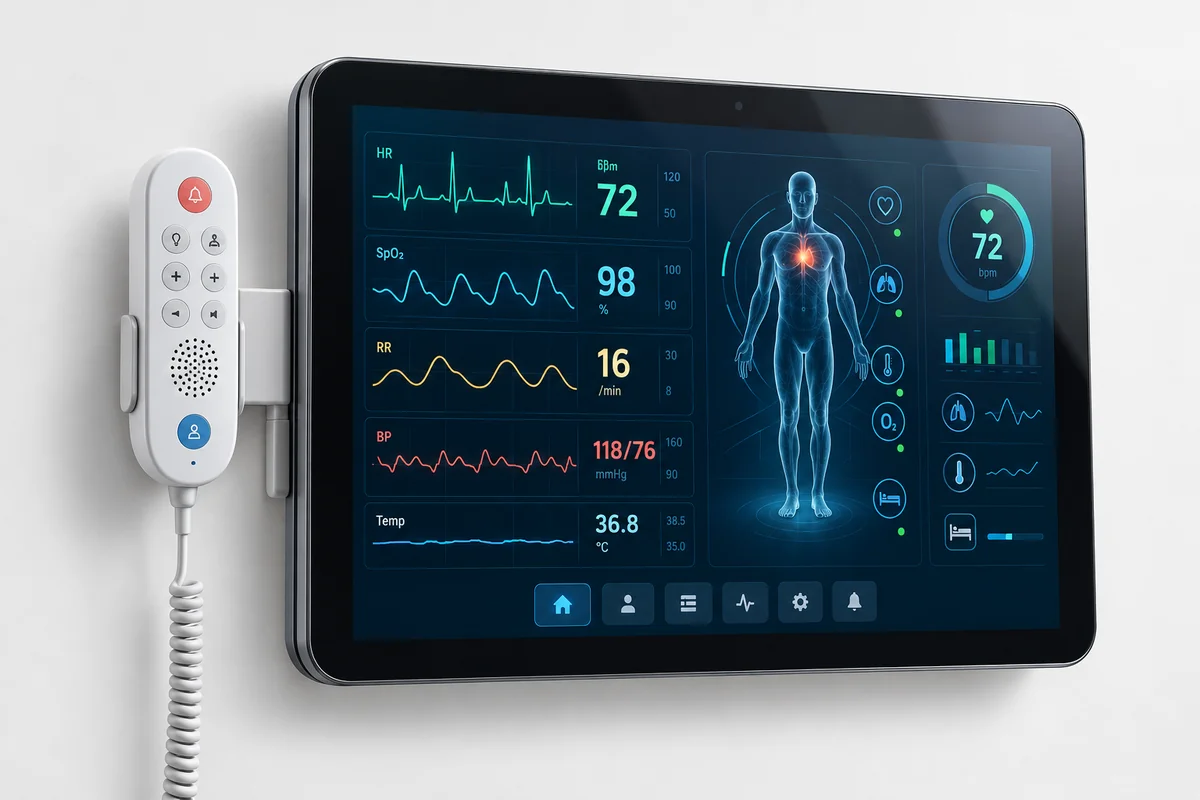
Medical device touch panels and displays, public kiosks and shared touchscreens, and glass fixtures in clinics, laboratories, kitchens and washrooms.