
Glass Cutting & Waterjet Cutting
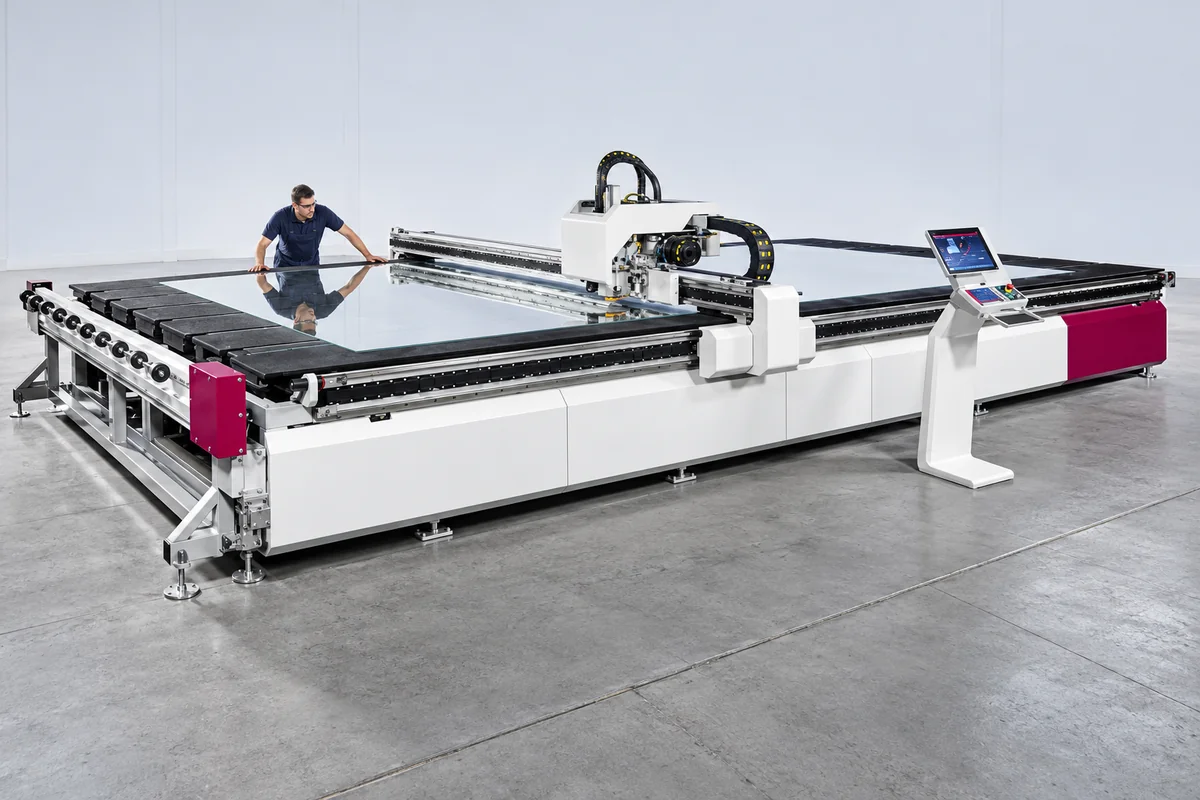
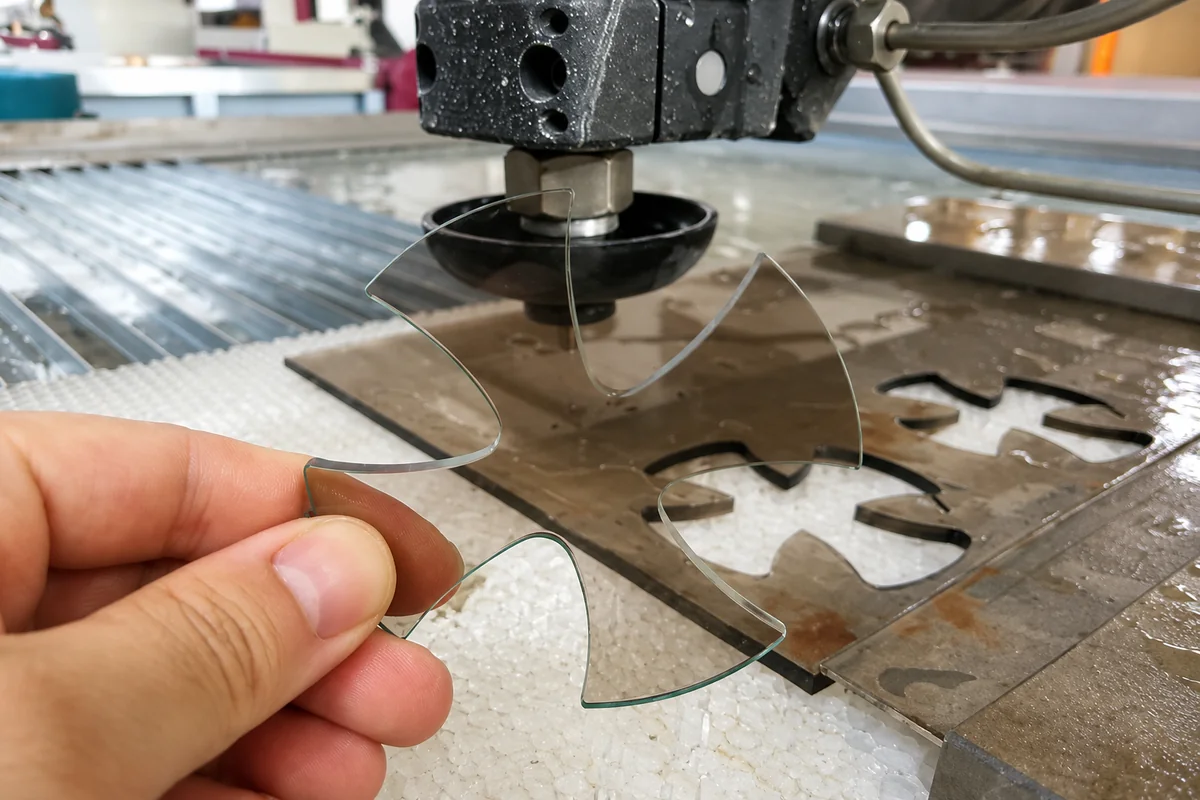
Glass cutting turns stock sheet into blanks and finished outlines. We scribe-cut straight lines to a 0.13 mm tolerance on sheets up to 3556 × 2438 mm, waterjet-cut curves, holes and cutouts in glass 1–38 mm thick, and laser-cut fine features in thin glass, nesting every order to get the most parts from each sheet.
Capabilities

Scribe cutting
0.13 mm tolerance · 0.15–25.4 mm thick
Waterjet
0.50 mm tolerance · 1–38.1 mm thick
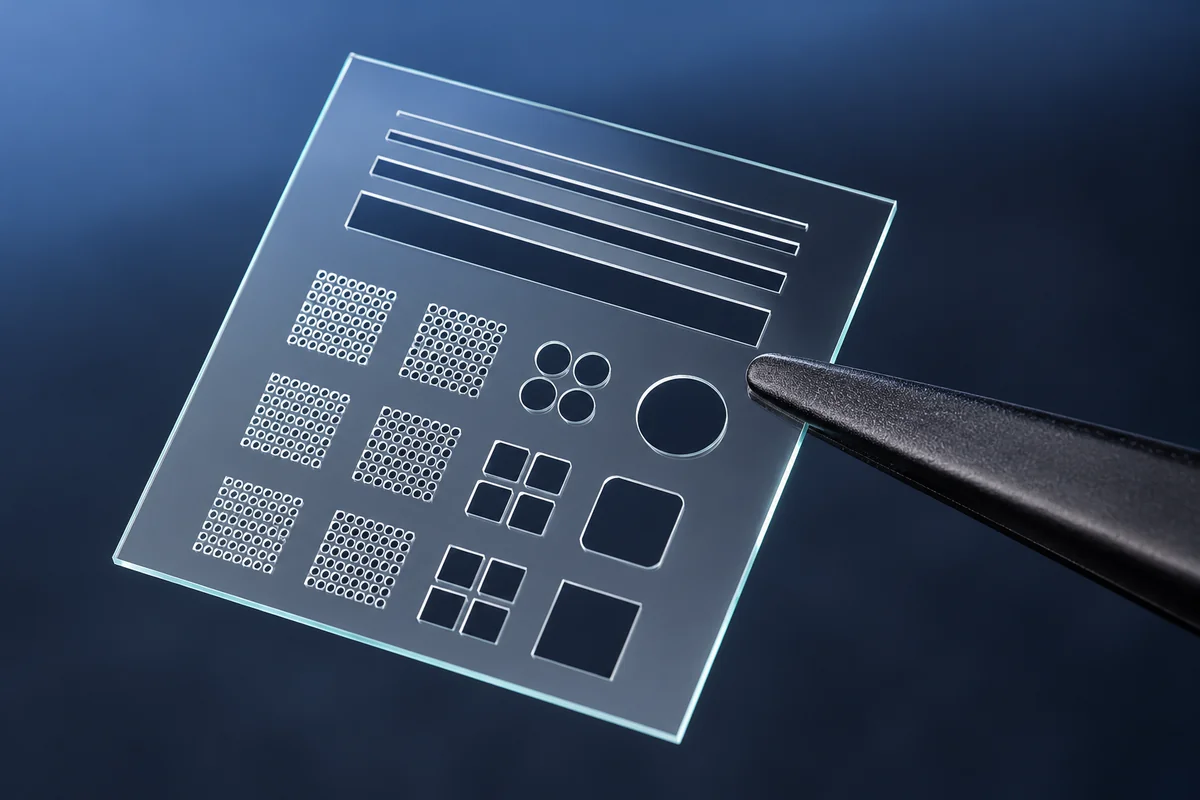
Laser
10–50 µm kerf · Thin and ultra-thin glass
Sheet size
Up to 3556 × 2438 mm scribed · Up to 2286 × 1168 mm waterjet

Materials
Float, low iron, Borofloat® · Gorilla®, D263, filter glass, mirror

Yield
Nested layouts · Sheet size chosen per order
Gallery
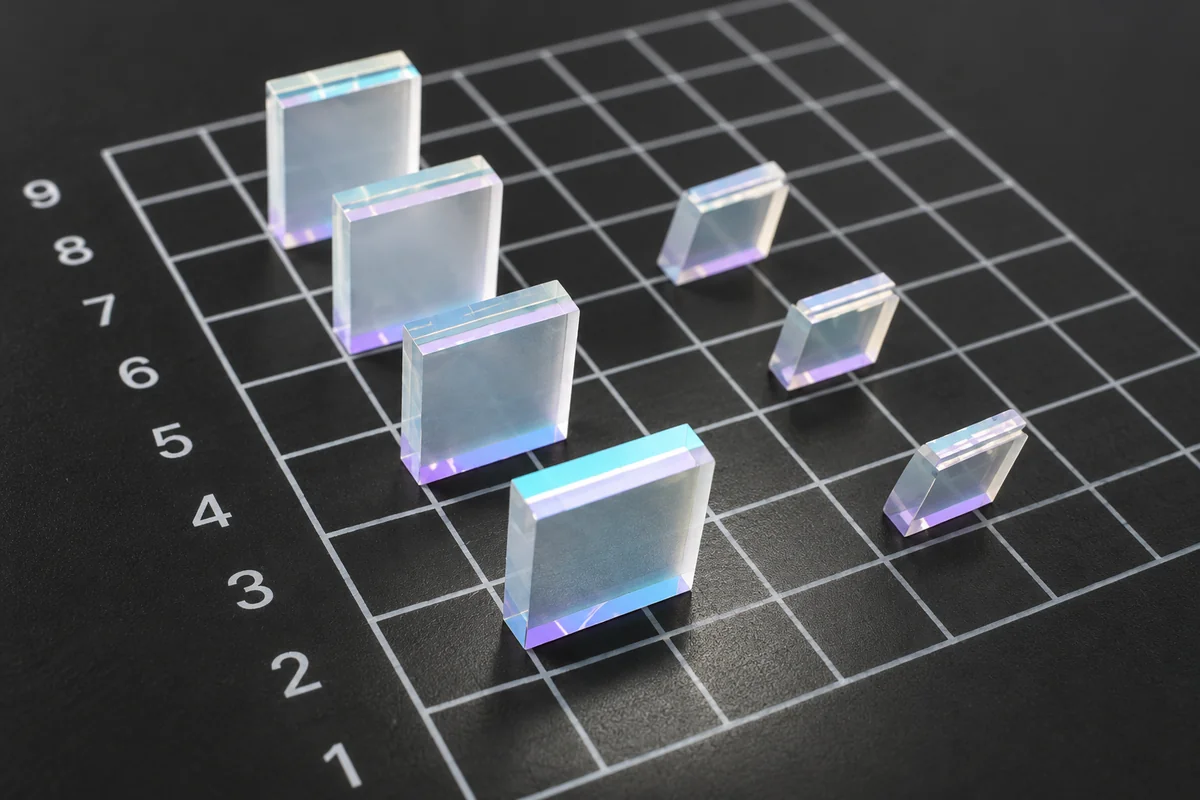
Get a glass cutting quote
Send a DXF or drawing with the outline tolerance, glass type and thickness, quantity and any holes or cutouts, and we will choose the cutting method and quote the parts.
Cutting Methods Compared
The outline, the thickness and the features inside the part decide the method.
| Method | Tolerance | Glass thickness | Maximum size | Best for |
|---|---|---|---|---|
| Scribe cutting | 0.13 mm | 0.15–25.4 mm | 3556 × 2438 mm | Straight-line blanks and rectangles, fastest per cut |
| Waterjet | 0.50 mm | 1.0–38.1 mm | 2286 × 1168 mm | Curves, holes, internal cutouts and thick glass |
| Laser | Micrometer level, 10–50 µm kerf | From 0.05 mm, typically to 2–5 mm | — | Fine features and small radii in thin glass |
| CNC machining | — | — | — | Finished profiles, steps and edge detail |
Tolerances widen with thickness and sheet size. Precision sawing for small parts and tube and rod cutting are covered on their own pages.
Cutting Yield Sets the Part Price
Yield is the share of a raw sheet that ends up as good parts, and it drives the material cost of every piece. Each part is cut slightly oversize, from 0.05 mm per side on thin glass to 0.25–0.5 mm per side on glass 2 mm and thicker, before it is edged to size.
Orientation alone changes the result. A 4 mm part finished at 454 × 131 mm, laid out with its long side across a 1830 × 2440 mm sheet, fits 72 to a sheet at about 96% yield; turned the other way, it fits 65 at about 87%. If the same part were 4 mm longer, only three would fit across the sheet instead of four, and yield would fall to about 73%.
That is why an outline tolerance on your drawing matters: it tells us how much room we have to fit the most parts on each sheet.

Glass Cutting Questions
Can tempered glass be cut?
No. Thermally tempered glass shatters when cut, so every outline, hole and notch is cut before tempering. Chemically strengthened glass can be cut, but the cut edge loses its strengthened layer, so it is better cut before strengthening as well.
Which method for holes and cutouts?
Waterjet cuts holes, slots and internal cutouts in glass from 1 mm thick. For small holes in thin glass, or when the hole needs a finished edge, CNC drilling or laser cutting gives a cleaner result.
Is a cut edge finished?
No. A scribed edge is sharp and carries small chips, so it is seamed or ground before handling, strengthening or coating.
Which glass can be cut?
Float and low iron glass, Borofloat®, D263, B270, Gorilla® Glass, filter glass, mirror and teleprompter glass, AR and anti-glare glass, and patterned glass.
From Sheet to Blank
- 01
Nest the order
We choose the stock sheet size and part orientation that give the highest yield for your quantity.
- 02
Cut
Straight lines are scribed; curves, holes and cutouts are waterjet or laser cut.
- 03
Break and separate
Scribed lines are broken cleanly and the parts separated from the offcut.
- 04
Seam or grind the edges
Sharp edges are seamed or ground to remove chips before any further handling.
- 05
Pass to the next step
Blanks move on to CNC machining, drilling, strengthening, printing or coating as the drawing requires.