
UV Bandpass Filters
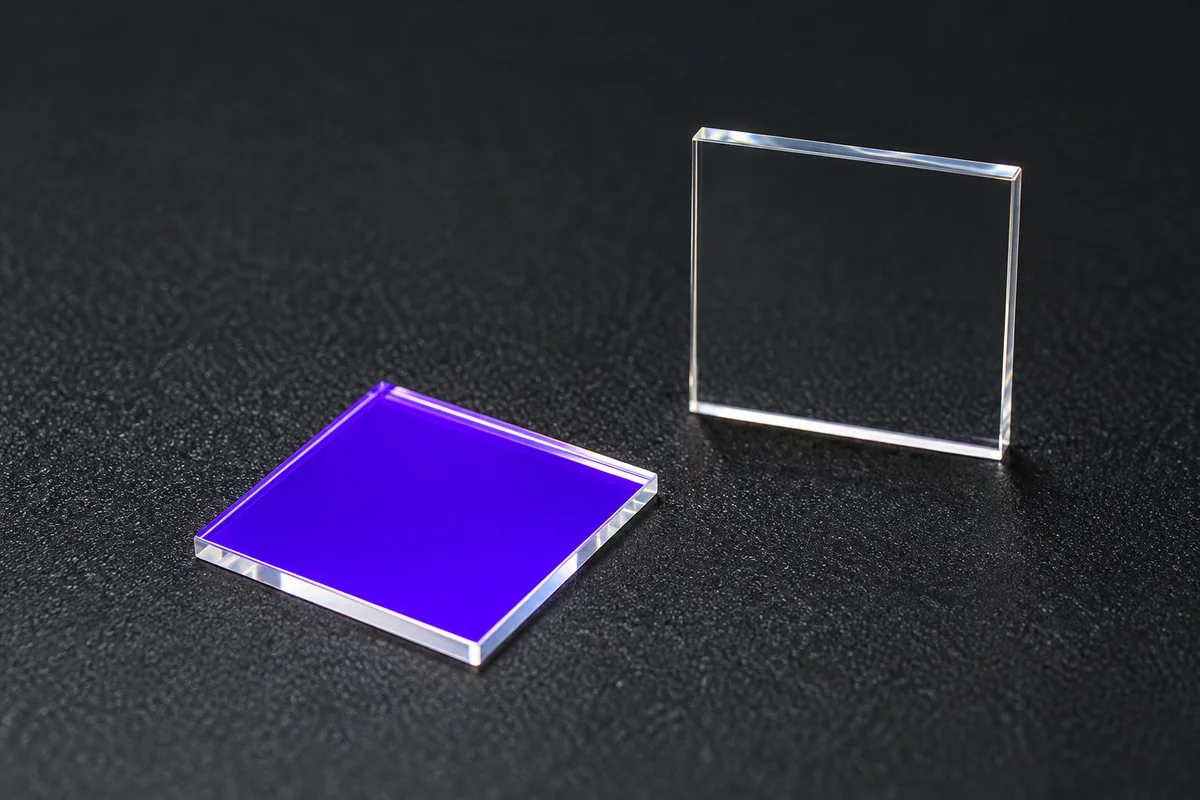
UV bandpass filters pass a selected ultraviolet band and block visible and infrared light on both sides. We supply them from 240 nm to 400 nm, as broadband near-UV filters up to 75 nm wide and narrow interference filters 14–20 nm wide held to ±5 nm, on fused silica, sapphire or Borofloat® substrates.
Capabilities
Spectral range
240–400 nm · Deep UV to near UV
Pass band width
14–20 nm interference · 50–75 nm broadband
Peak transmission
≥85–90% in near UV · ≥30% at 240–260 nm

Substrates
Fused silica, sapphire · Borofloat®

Construction
Hard-coated, AR · 40/20 scratch-dig

Mounting
Threaded or unmounted · Custom bands
Gallery
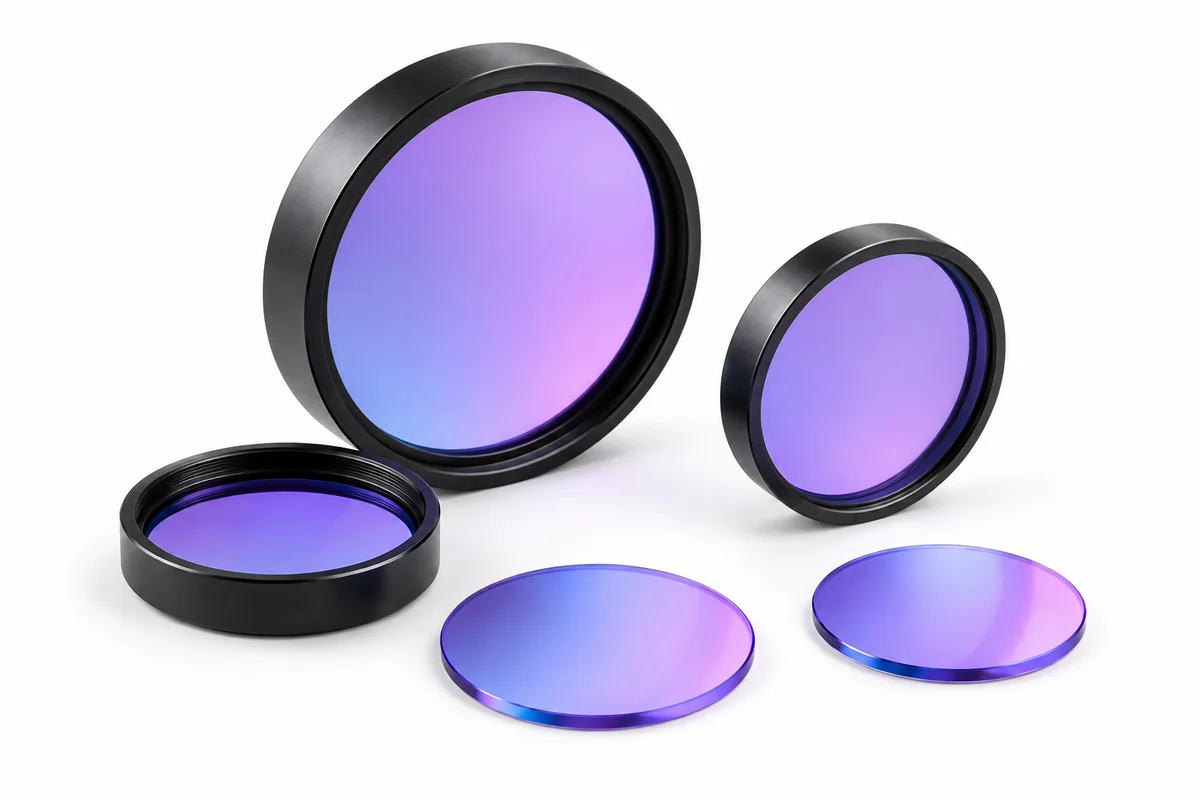
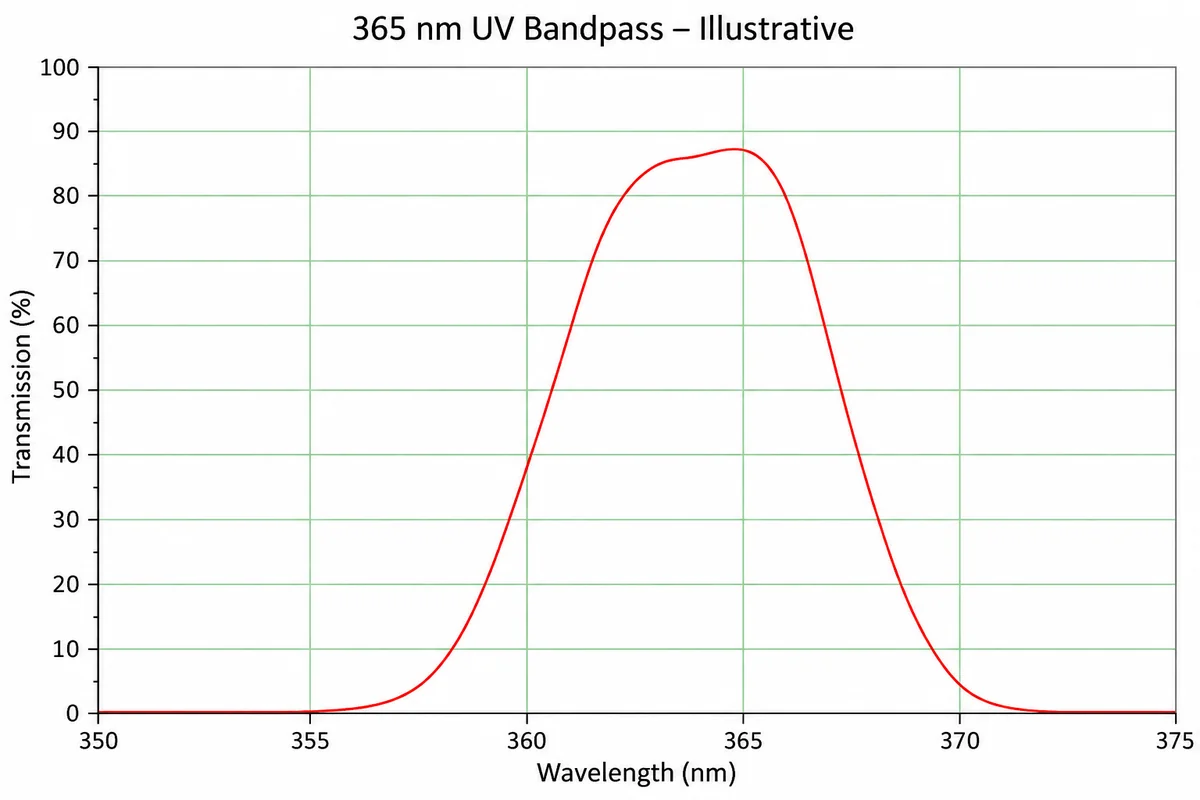
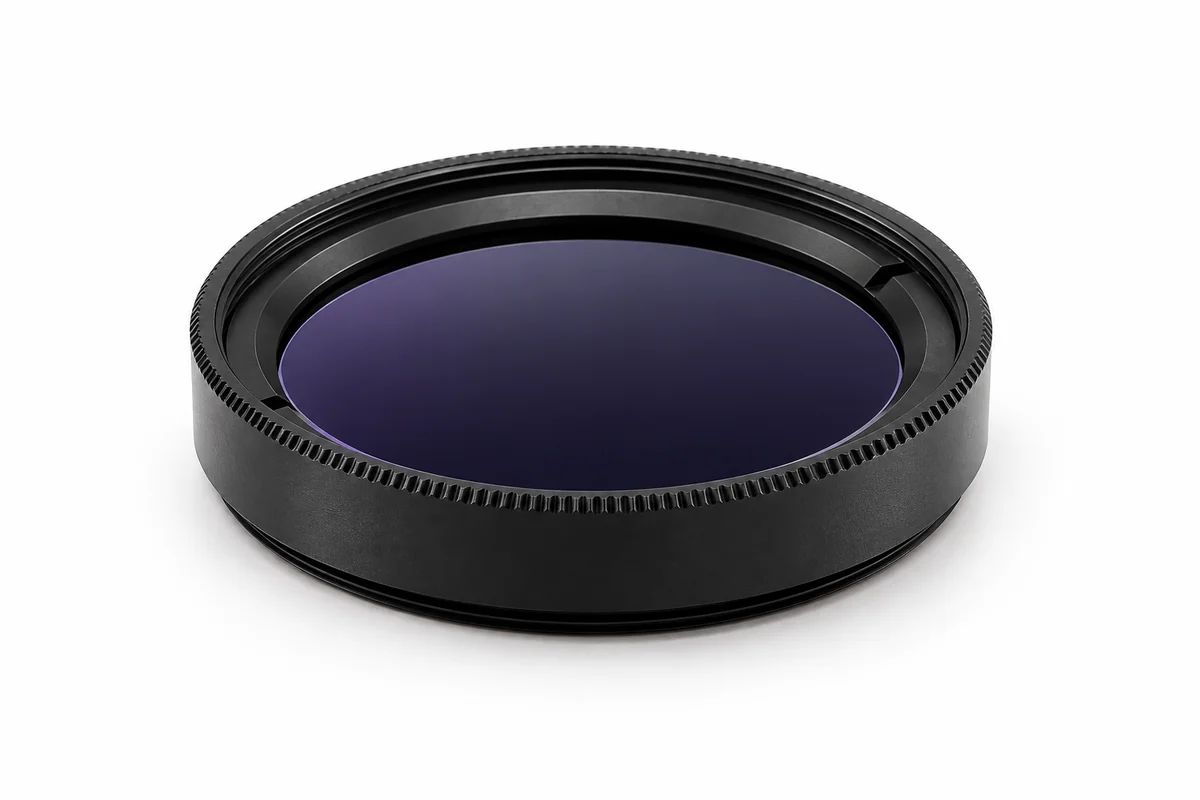
Get a UV bandpass filter quote
Tell us the UV source or line, the band to pass, what must be blocked and the mount, and we will match a standard band or quote a custom filter.
Which UV Band Does Your System Use?
Match the filter to the UV source or line your system depends on.
254 nm deep UV
The BP250 passes 240–260 nm, isolating the 254 nm mercury line used in germicidal lamps, sterilization checks and DNA absorbance measurement.
Broad near-UV imaging
The BP324 (290–365 nm) and BP340 (315–365 nm) pass a wide UV band and block visible light, for reflective UV imaging and semiconductor and surface inspection.
A single line near 350 nm
The Bi350 is an interference filter passing 344–358 nm, narrow enough to isolate one line, such as a 355 nm laser, from neighboring light.
365 nm and 395 nm LEDs
The BP365 passes 335–400 nm, covering both common UV LED wavelengths while blocking visible light and UVC excitation. It suits UV fluorescence, forensic imaging and curing systems.
385 nm emission or LED
The Bi385 passes 370–390 nm at more than 90%, isolating a 385 nm band with a ±5 nm tolerance.
Standard UV Bands
| Model | Pass range | Pass band width | Peak transmission | Tolerance | Type |
|---|---|---|---|---|---|
| BP250 | 240–260 nm | 20 nm | ≥30% | ±10 nm | Deep UV bandpass |
| BP324 | 290–365 nm | 75 nm | ≥90% | ±10 nm | Broadband near UV |
| BP340 | 315–365 nm | 50 nm | ≥90% | ±10 nm | Broadband near UV |
| Bi350 | 344–358 nm | 14 nm | >70% | ±5 nm | Narrow interference |
| BP365 | 335–400 nm | 65 nm | ≥85% | ±10 nm | Broadband near UV |
| Bi385 | 370–390 nm | 20 nm | >90% | ±5 nm | Narrow interference |
Peak transmission falls as the band moves deeper into the UV: 85–90% for broad near-UV bands, more than 70% for the narrow 350 nm band and 30% for the 240–260 nm band. For a 254 nm system, plan for about a third of the light in the band to reach the detector, and set exposure time or source power to match.
UV Bandpass Filter Questions
Which substrate does a UV bandpass filter need?
It depends on how deep the band goes. Borofloat® starts to transmit at about 340 nm, so it works for 365 nm and 385 nm bands. Bands below that, including 254 nm and 290–340 nm, are built on fused silica or sapphire, which transmit down to 170 nm and 190 nm.
Broadband or narrow interference filter?
Broadband filters pass 50–75 nm and collect more light from LED sources and broad emission, at ±10 nm tolerance. Narrow interference filters pass 14–20 nm at ±5 nm and isolate a single line. Narrow bands lose more transmission in the shorter UV: the Bi350 reaches 70%, the Bi385 90%.
How is a UV bandpass filter different from a UV pass or UV blocking filter?
A UV bandpass filter isolates one UV band and blocks visible and infrared on both sides. A UV blocking window does the opposite, removing UV and passing visible light; a UV pass filter transmits the UV spectrum more broadly.
Do the filters hold up under UV exposure?
The hard-coated construction keeps spectral performance stable under high-energy UV, and fused silica and sapphire substrates resist the darkening some glasses show under deep-UV light.
What mounts and custom bands are available?
Filters are supplied in threaded mounts or unmounted. Custom center wavelengths, tighter bandwidths and sizes are made to order.