
Anti-Glare (AG) Glass
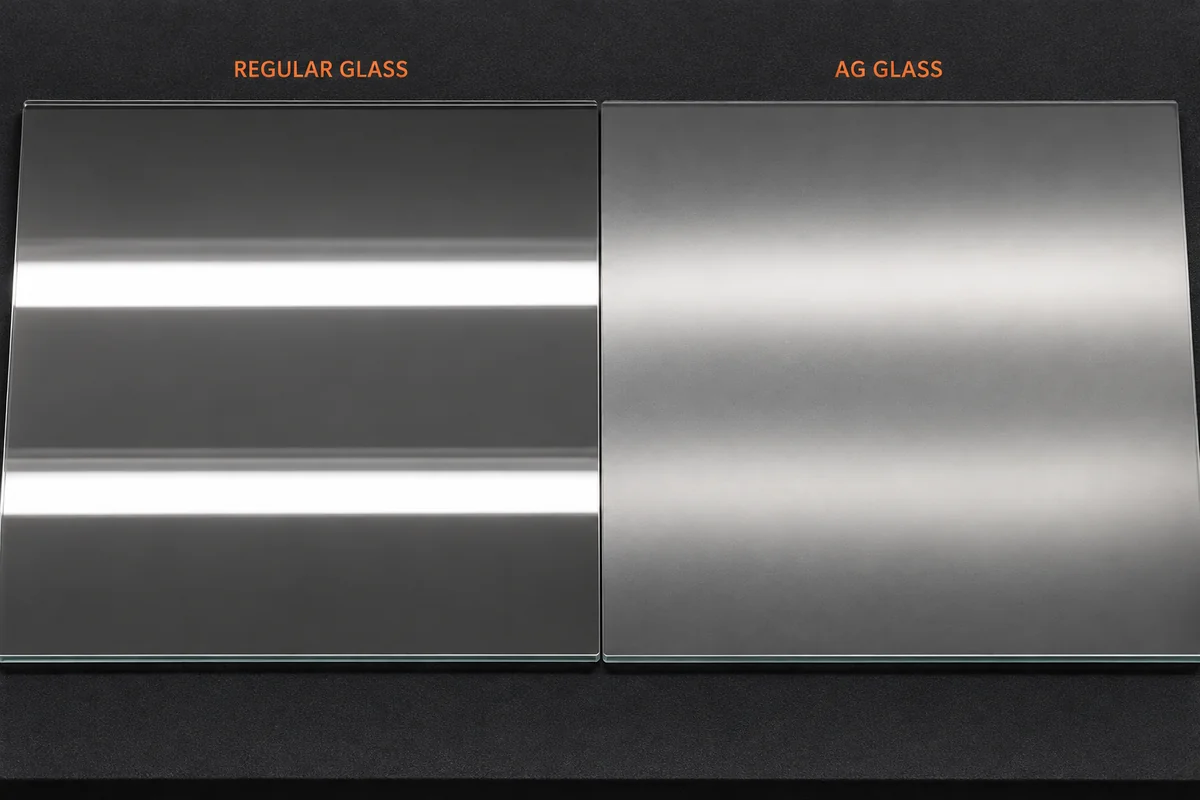
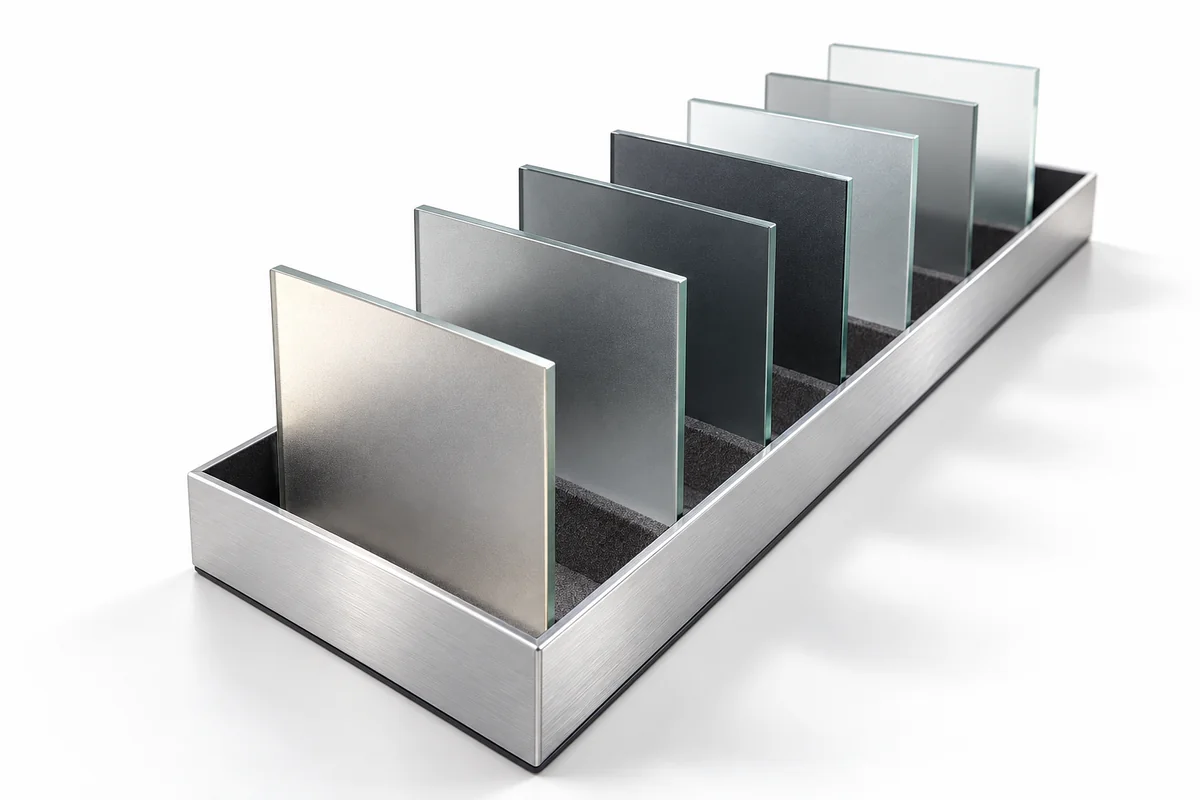
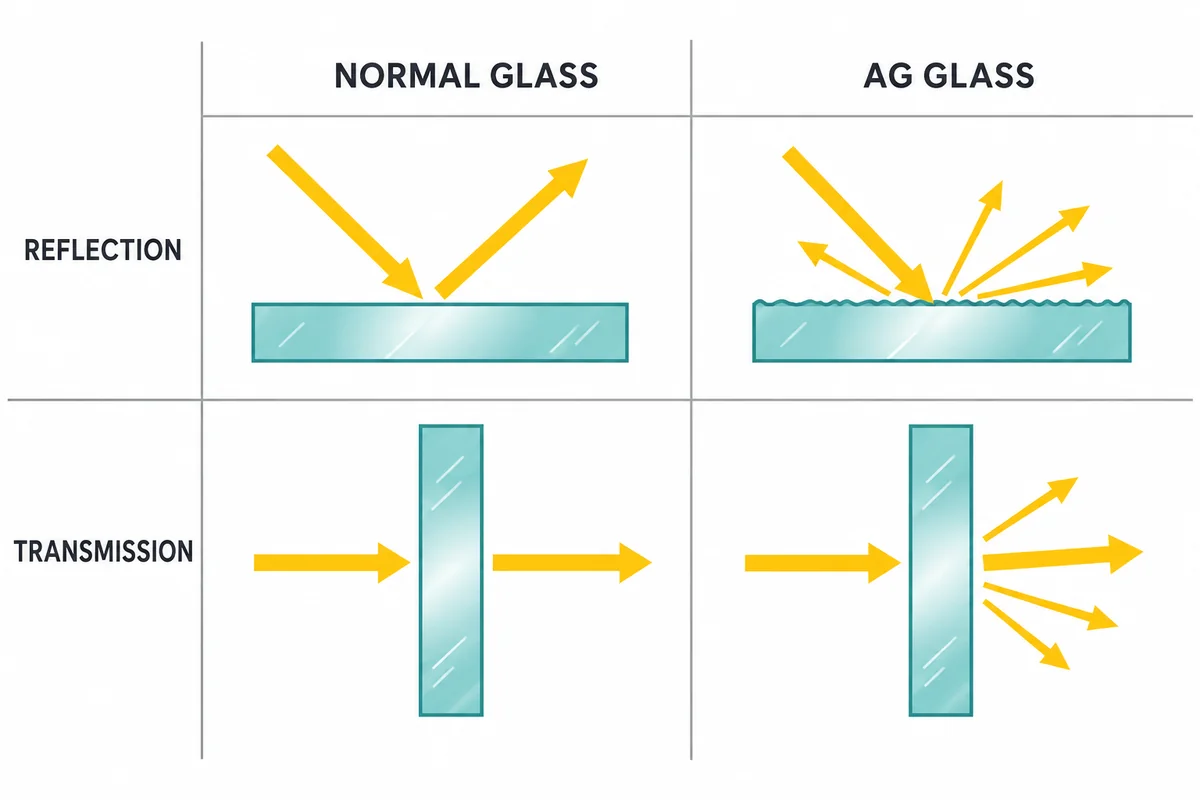
AG glass has a surface etched with a fine micro-texture that scatters reflected light, so lamps and sunlight show as a soft blur instead of a sharp mirror image. We acid-etch AG cover glass from 0.33 to 5 mm at gloss levels from 35 to 130 GU, on one or both sides, then strengthen it, print it and add AR or AF where needed.
Capabilities

Gloss
35–130 GU at 60° · Held to ±5 GU

Haze
2–17% · Set by the gloss level

Thickness
0.33–5 mm · Single or double-sided etch
Transmission
Above 89% · At every gloss level

Durability
Etched into the glass · Under 0.5% haze rise after 1,000 Taber cycles

Finishing
Strengthened after etching · AR, AF and printing
Gallery
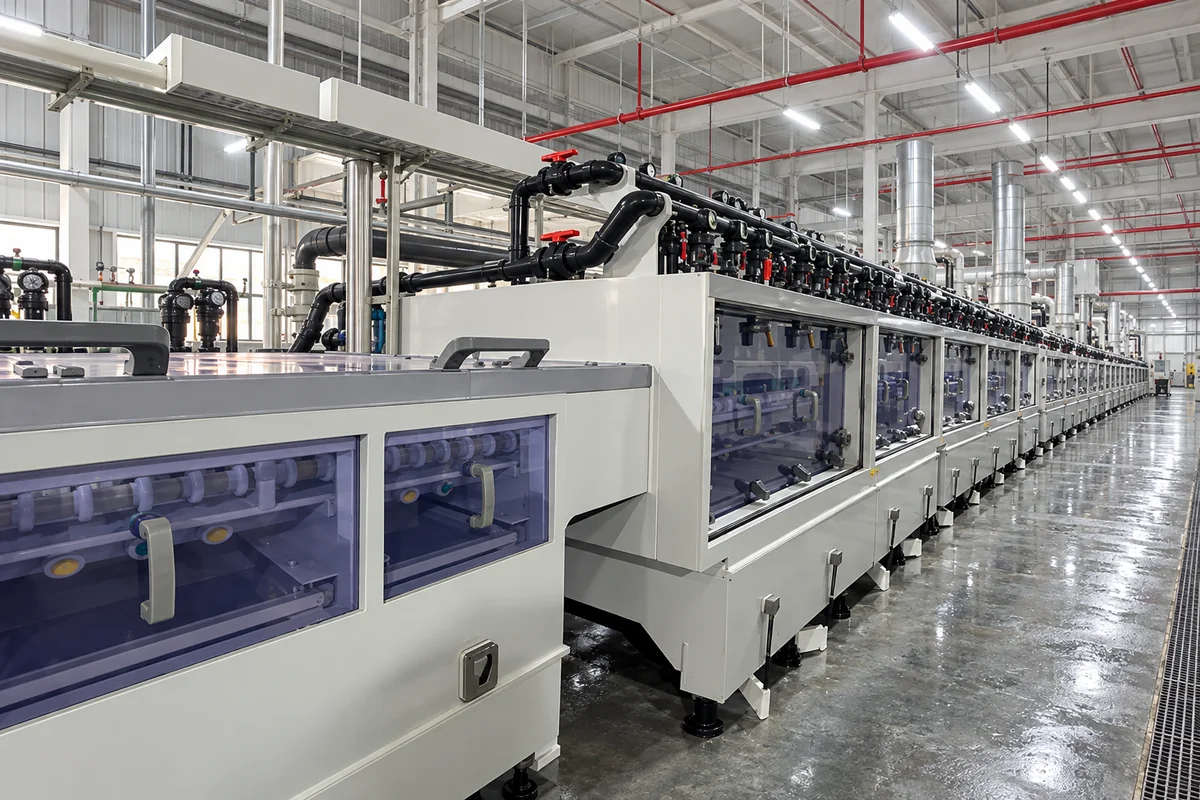
Get an AG glass quote
Send the drawing, thickness, target gloss and tolerance, which side to etch, the display behind it and any printing or coatings, and we will confirm the etch and quote the panels.
Choose the Gloss Level
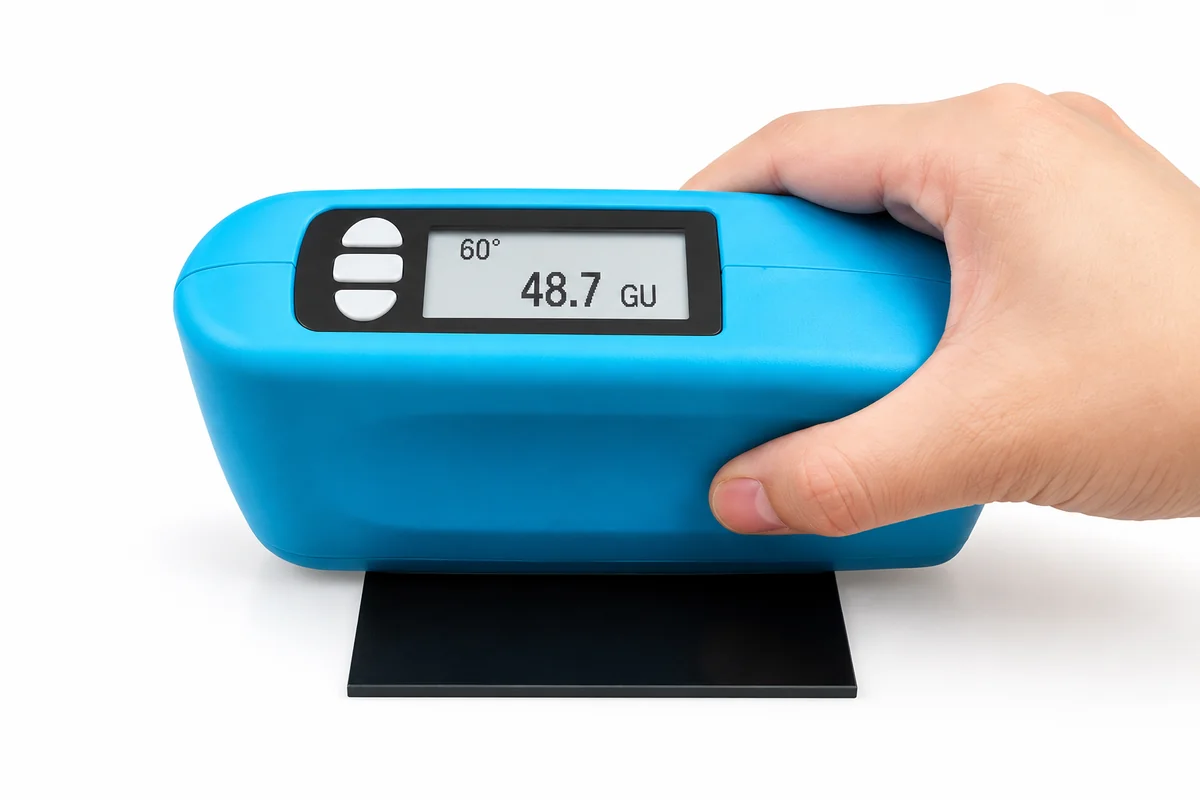
Gloss, measured in gloss units (GU) at 60°, is how AG glass is specified. Lower gloss means a heavier etch and stronger glare control.
110–130 GU, light etch
Indoor monitors, office equipment and medical displays, where reflections are mild and image sharpness comes first.
80–100 GU, medium etch
Vehicle center displays and laptops, which face changing light from windows and overhead lamps.
40–70 GU, heavy etch
Outdoor kiosks, marine and machinery displays in direct sunlight, where breaking up glare matters more than the finest detail.
Test samples under the real lighting before fixing the level, and state the tolerance: ±10 GU per sheet is the industry norm, and we hold ±5 GU.
What AG Does, and What It Does Not
AG scatters reflected light; it does not reduce it. An etched panel still reflects about 8% of incoming light across its two surfaces, the same as clear glass, but spread into a soft haze instead of a sharp image. To cut the amount of reflected light as well, add an AR coating over the etch.
The scattering also affects the image. As gloss falls, haze rises and clarity drops: at 110 GU, clarity is 91 and haze 2%; at 35 GU, clarity falls to 40 and haze rises to 17%. On high-resolution displays, a heavy etch can also show sparkle, a fine glitter over the pixels, so these screens need a higher gloss level or a low-sparkle etch.
For touch screens and bonded displays, etch only the outer face. The inner face stays smooth for optical bonding, lamination and the touch sensor.
How AG Glass Is Etched
- 01
Cut and edge
Glass is cut to shape and edge ground before etching.
- 02
Clean and protect
Panels are ultrasonically cleaned, and an acid-resistant film covers any face that must stay smooth.
- 03
Etch
A temperature-controlled acid bath etches the exposed face to a depth of 0.05–0.07 mm, forming the micro-texture.
- 04
Rinse and dry
The acid is neutralized, rinsed off in deionized water and the glass is dried.
- 05
Measure
Gloss, haze, transmission and roughness are measured on each lot before release.
- 06
Strengthen and finish
The etched glass is chemically strengthened, then printed and AR or AF coated as specified. Etched AG keeps the strength and hardness of the base glass.
Gloss, Haze and Clarity by Level
| Gloss (GU) | Roughness Ra (µm), single / double side | Haze, single / double side | Clarity, single / double side |
|---|---|---|---|
| 35 ±10 | 0.18 / 0.16 | 17% / 17% | 40 / 40 |
| 50 ±10 | 0.15 / 0.16 | 11% / 11% | 57 / 57 |
| 70 ±10 | 0.12 / 0.09 | 4.7% / 6% | 79 / 70 |
| 95 ±10 | 0.09 / 0.07 | 3% / 2.5% | 83 / 85 |
| 110 ±10 | 0.07 / 0.05 | 2% / 1.5% | 91 / 91 |
Transmission stays above 89% at every level. Etched AG panels we supply run from 0.7 mm OLED and LED display covers and 1.0 mm car navigation screens to 1.1 mm drilled and printed covers and 2.0 mm machinery dashboards.