
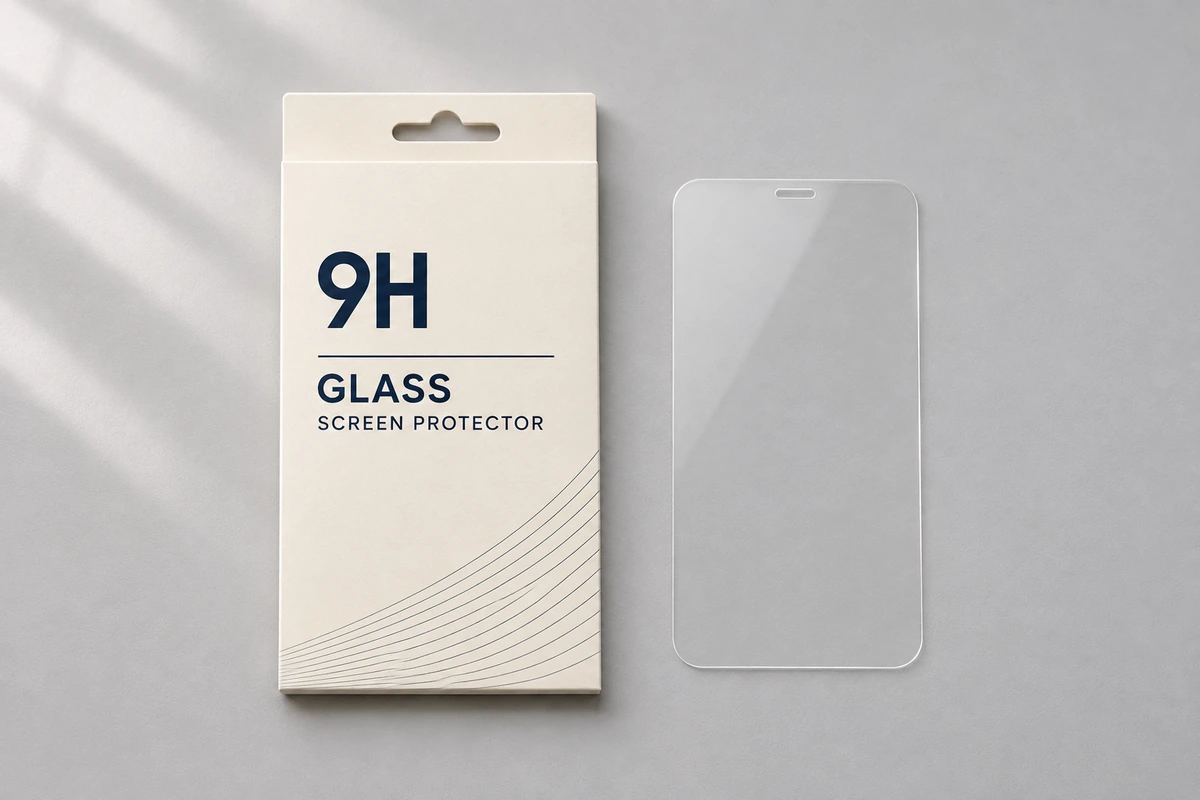
It isn't. "9H" refers to a pencil. Specifically, it means a very hard drawing pencil, graded 9H, was pushed across the surface and didn't leave a scratch.
That's a real test, but it was designed for paint, and glass passes it easily. Here's what the number tells you, what it doesn't, and what's more useful to ask about.
The Pencil Test Behind "9H"
Pencils are graded from soft to hard. A "B" pencil is soft and dark, "HB" is the everyday school pencil, and "H" pencils get harder as the number goes up. The hardest common grade is 9H.
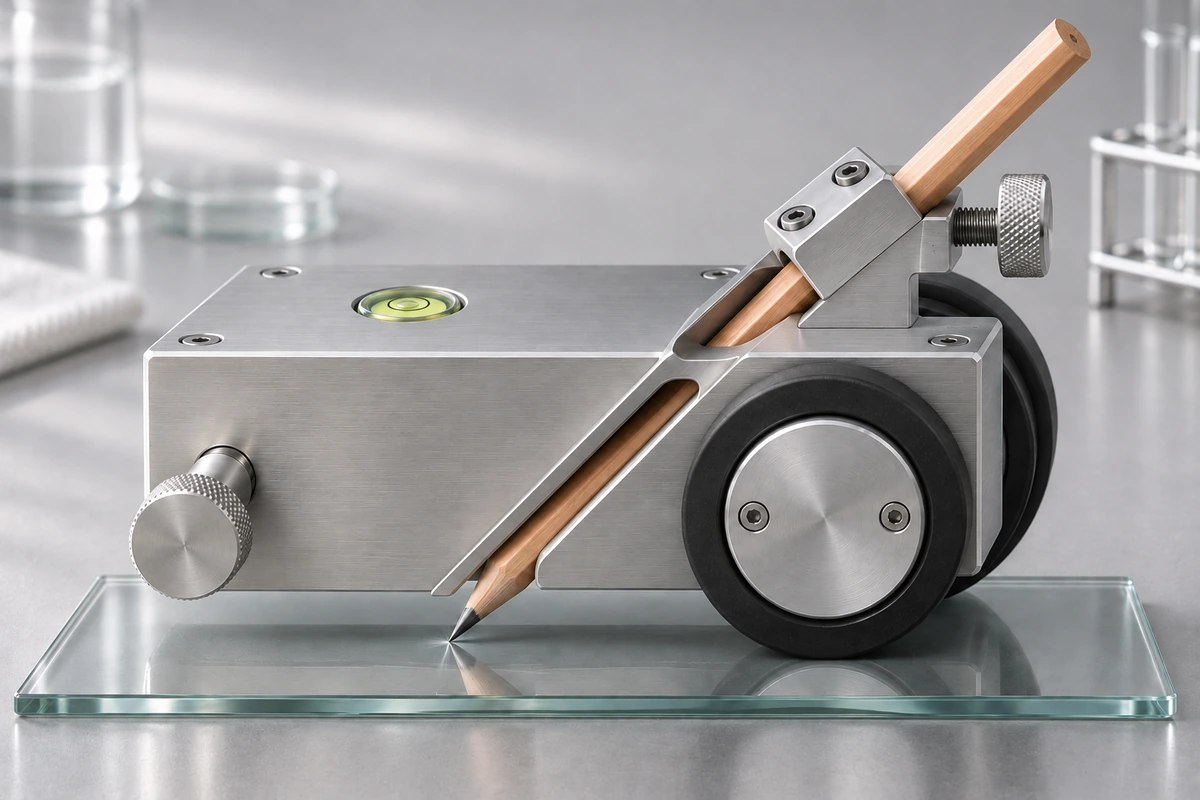
Paint and coating makers use these pencils to check how tough a finish is. In the version of the test set out in ISO 15184, the pencil is held at a 45° angle, pressed down with a 750 g (about 1.7 lb) weight, and slid across the surface. The result is the hardest pencil that leaves no mark. The American equivalent, ASTM D3363, works the same way, but its scale stops at 6H, so a 9H rating comes from the ISO version.
The test is quick and cheap, and it does its job well: it tells you whether one paint finish is tougher than another. It was never meant to grade glass.
Why Almost Any Glass Gets a 9H Score
Pencil "lead" isn't lead at all. It's graphite mixed with clay, and even the hardest pencils are soft compared with glass. On the Mohs scale, which ranks how easily one material scratches another, ordinary glass sits around 5.5. One estimate puts the hardest pencils at roughly 3, though the two scales don't convert exactly.
Rubbing a 9H pencil on glass is a bit like rubbing chalk on a kitchen tile: the chalk wears away, the tile doesn't. So plain window glass, a cheap screen protector and a premium phone cover would all earn the same 9H rating. The number can't tell them apart.
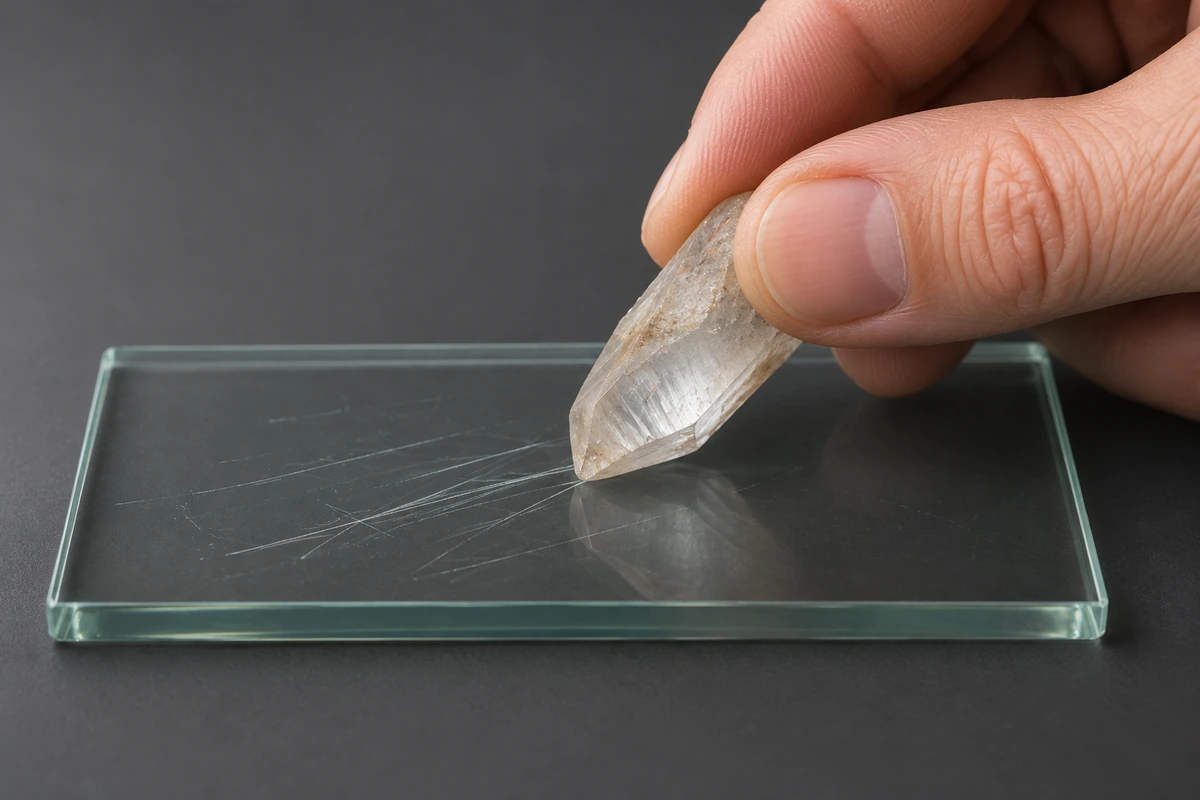
What actually scratches glass is grit that's harder than glass, mostly sand. Sand is largely quartz, which rates 7 on the Mohs scale. That's why a screen that lives in a pocket with a bit of sand picks up fine scratches, and why a 9H label doesn't promise anything about that.
And What About "Tempered"?
"Tempered" usually means glass that has been heated and then cooled quickly with blasts of air. That locks the surface into compression and makes the glass several times stronger.
The trick needs some thickness to work. Below about 3 mm (1/8 in), it gets very hard to do, and even specialized equipment only gets down to about 2 mm. Glass screen protectors are typically around 0.33 mm, roughly the thickness of three sheets of paper.
So on a screen protector, "tempered" almost always means something else. Most likely the glass was chemically strengthened: soaked in a hot salt bath that swaps small ions in the surface for larger ones and squeezes the surface tight. It might also mean the glass wasn't strengthened at all. The label alone doesn't say which.
When the Pencil Test Does Make Sense
Pencil hardness isn't useless. It is the right test for soft surface layers:
- Hard coatings on plastic screens and lenses
- Printed inks and decorative layers on glass
- Coated films, where it helps show whether the coating has cured properly
On these surfaces, different products really do score differently, so the number means something.
Better Questions to Ask a Glass Supplier
If you're buying glass covers or screen protectors, a few plain questions tell you far more than "9H":
What kind of glass is it? Ordinary soda-lime glass and aluminosilicate glass (the family that includes Gorilla Glass) behave very differently when dropped.
How was it strengthened? Thermally tempered, chemically strengthened, or not at all?
Can you share the strengthening numbers? For chemically strengthened glass, suppliers measure the surface compression (CS, in MPa) and how deep it goes (DOL, in microns). Higher compression and deeper layers generally mean tougher glass.
Has it been drop-tested? A drop or ball-drop test on finished pieces is the closest thing to real life.
Does it have a fingerprint-resistant coating, and how long does it last? A good coating keeps water beading up even after repeated rubbing.
A supplier who answers these clearly knows their product. If the answer to every question is "it's 9H," you've learned something too.
If you'd like a second opinion on a glass spec or a supplier's datasheet, send it over and we'll take a look.