
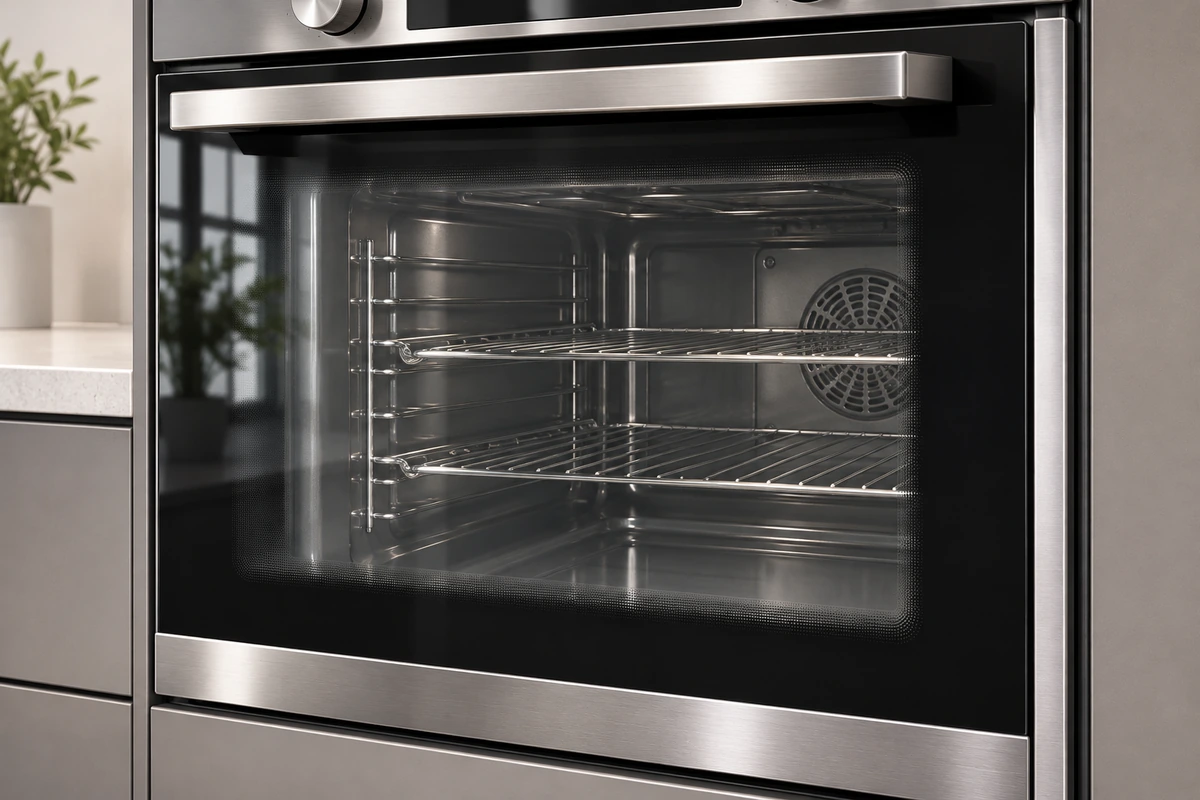
Ceramic ink is the toughest print you can put on glass. Once fired, it becomes part of the glass surface and shrugs off sunlight, heat, cleaning chemicals and scratching for years. The catch is the firing itself: it needs temperatures hot enough to soften the ink into the glass. That fits some glass perfectly and rules out others.
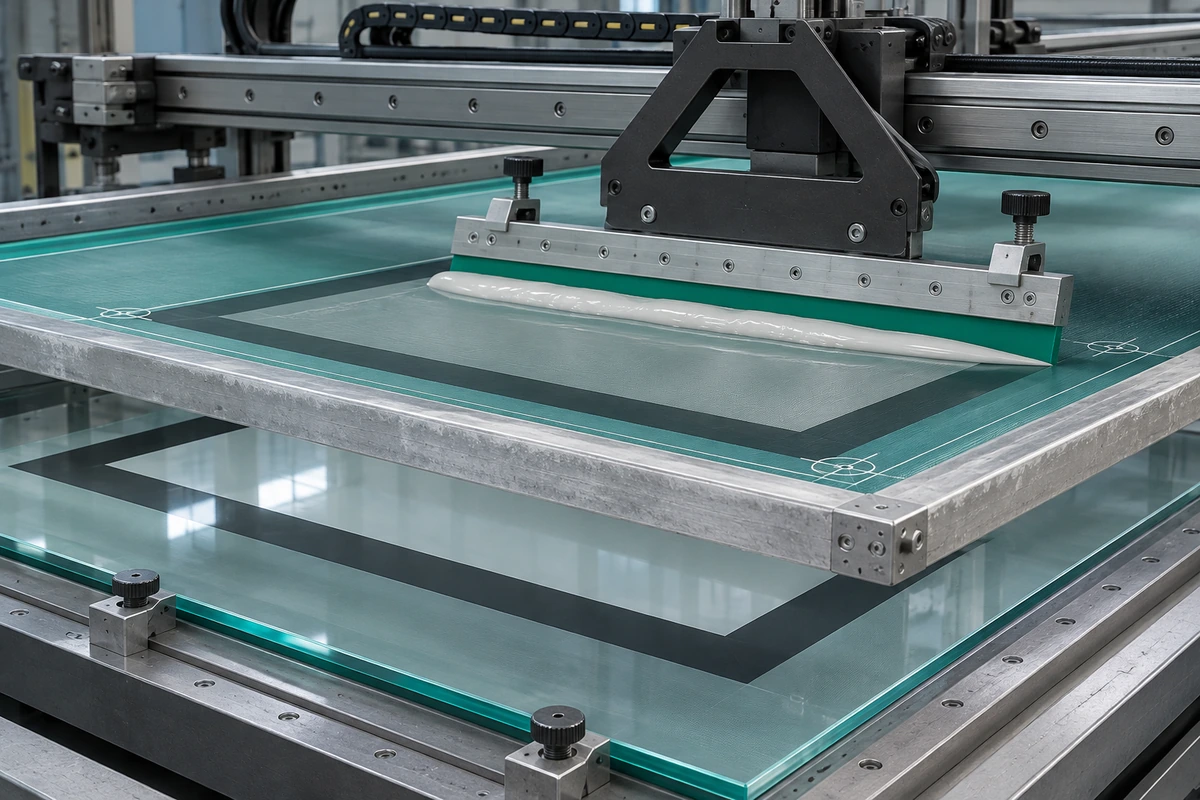
Two Kinds of Ink: Ceramic and Organic
Almost every printed border, logo or icon on glass uses one of two ink families.
Ceramic ink, also called enamel or frit, is mostly finely ground glass mixed with color pigments. After printing, it's fired at roughly 500–700 °C (930–1,290 °F). At that heat, the ground glass melts and fuses to the glass underneath, so the print is no longer sitting on the surface. It is part of it.
Organic ink is closer to a very tough paint: pigments in a resin binder, such as epoxy. It's cured with gentle heat, often around 120–200 °C (250–390 °F), or with UV light. It bonds firmly to the glass but stays a separate layer on top.
Each has clear strengths:
- Ceramic ink lasts far longer. It resists UV fading, high temperatures, harsh chemicals and abrasion, and can keep its look for decades.
- Organic ink offers almost any color, including bright and fluorescent shades, and it takes far less energy to cure. Ceramic colors are more limited, though ceramic can do true metallic and mirror-like finishes that organic inks can't.
Ceramic Ink and Tempered Glass: A Natural Pair
Thermal tempering already heats glass to around 620 °C (1,150 °F) before cooling it quickly with air. That's right in the range ceramic ink needs.
So the usual process is simple: cut and edge the glass, print the ceramic ink on the flat sheet, dry it, then send it through the tempering furnace. The furnace fires the ink and tempers the glass in one pass, and the print fuses permanently into the surface.
That's why ceramic printing is standard on oven doors, cooktops, refrigerator panels, building glass and car windows. These are thicker pieces of glass, usually 3 mm (1/8 in) and up, that need both the strength of tempering and a print that survives heat, sunlight and constant cleaning.
Why Ceramic Ink and Chemically Strengthened Glass Don't Mix Easily
Thin cover glass, under about 3 mm, is usually chemically strengthened instead of tempered. It's soaked in a hot salt bath at around 400 °C (750 °F), where larger potassium ions replace smaller sodium ions in the surface and squeeze it into compression.
The order of steps is where ceramic ink runs into trouble:
- If you fire ceramic ink after chemical strengthening, the 500–700 °C heat lets the ions move again. The compressed surface layer relaxes, and the glass loses much of the strength it just gained. High heat can also warp thin glass. One glass patent describes exactly this problem.
- If you print ceramic ink before strengthening, the fused ink layer covers the glass surface. The salt bath needs direct access to the glass to swap ions, so the area under the print may not strengthen properly. Special decorative layers designed to let ions through do exist in patents, but they aren't a routine option.
That's why most printing on chemically strengthened cover glass, from phone screens to smart-home panels, uses organic ink. It's printed after strengthening and cured at low temperature, so the strengthened layer stays intact. A good organic ink layer around 25 µm thick can block more than 99.8% of light, enough for a solid black border with no light leaking through.
What Printing Does to Strength
Any print on the surface of glass slightly affects how it handles stress, and ceramic ink more than most. Because it fuses into the surface, it changes the glass right where cracks usually start.
The difference is measurable. One German glass processor lists a bending strength of 120 MPa (17,400 psi) for its toughened glass, but 90 MPa (13,000 psi) when the enameled side is the one being stretched.
In practice, that means:
- Put the printed side where it will see the least bending, often the inside face of a panel.
- If the glass is load-bearing or safety-critical, check its design strength with the enamel included.
Organic ink has much less effect on strength, because it doesn't change the glass surface itself.
Choosing Between Ceramic and Organic Ink
| Product | Typical glass | Usual ink |
|---|---|---|
| Oven doors, cooktops, appliance fronts | Tempered, 3–6 mm | Ceramic |
| Outdoor kiosks, signage, building glass | Tempered, 4 mm and up | Ceramic |
| Car windows and display surrounds | Tempered or laminated | Ceramic |
| Smart-home panels, thermostats, light switches | Chemically strengthened, 0.7–2 mm | Organic |
| Phones, tablets, handheld devices | Chemically strengthened, under 1 mm | Organic |
| Indoor HMI and medical touch panels | Chemically strengthened, 1–3 mm | Organic (or ceramic if tempered and thicker) |
The simple version: if the glass is thick enough to temper and the print has to survive heat, sun or years of harsh cleaning, ceramic ink is the better choice. If the glass is thin and chemically strengthened, organic ink is almost always the right call. Modern organic inks are tough enough for everyday touch screens, as long as the supplier backs them with adhesion and wear testing. If you need a specific color, a gradient or a very fine detail, organic ink gives you more freedom either way.
If you're weighing up ink options for a panel, tell us the glass thickness and where the product will be used, and we'll suggest what fits.